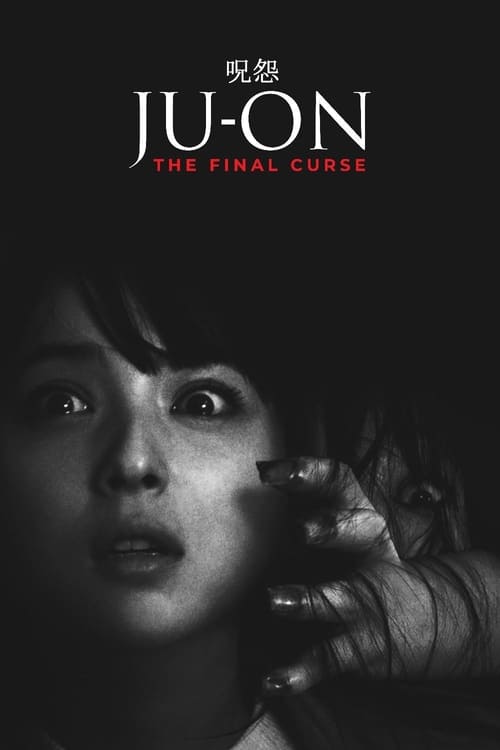
Ju-on: The Final Curse
Plot
Following the events of Ju-on: The Beginning of the End, Mai, the older sister of elementary schoolteacher Yui Shono, goes to look for her sister, who disappeared after a year while working in an elementary school. Mai soon discovers the Teriyaki household who tells her about what happened to her sister. Mai will now uncover the dark secrets of Ju-on and will try to end the curse once and for all.
Get the Weekly Woke Watchlist
New and trending movies scored for woke bias, preachy messaging, and forced political themes — before you waste your evening.
No spam. One useful email per week.
Overall Series Review
Categorical Breakdown
The film is a product of Japanese cinema featuring an all-Japanese cast, centering on a local supernatural horror myth. The narrative operates entirely outside the framework of Western race-based identity politics and intersectional hierarchy. Character conflict is based on contact with the curse, not on immutable characteristics, and no vilification of 'whiteness' is present.
The central conflict is the Ju-on curse, a uniquely Japanese concept of a vengeful spiritual grudge born from a tragedy within a Japanese home. The film directs its terror at the Japanese protagonists and domestic settings, representing an internal cultural fear. There is no hostility toward Western civilization, its ancestors, or core institutions.
The main protagonist, Mai, is a strong, independent woman who takes on the role of detective and confronts the supernatural evil. The root of the curse is Kayako, an Onryō who is an avenging spirit of domestic violence, a theme in J-Horror that critiques male-dominated violence. The male characters are mostly victims or ineffective, but the female lead is not portrayed as a 'perfect' Mary Sue, only a determined sister. The horror context revolves around a twisted, anti-family unit, but does not present a 'motherhood is a prison' lecture.
The final major plot point involves the male ghost, Toshio, possessing the body of a young, terminally ill girl to secure a new vessel for the curse's continuation. This is a horrific, supernatural body-switching device used for the continuation of evil, not a statement on gender identity or a promotion of sexual ideology. The motivation is purely self-preservation of the curse, not political messaging on transitioning or deconstructing the nuclear family.
The entire story is built upon a supernatural, spiritual curse known as the Ju-on, which stems from intense negative human emotion and spiritual grudge. The film lacks any reference or hostility toward Christianity, or any other traditional Western religion. Morality is superseded by the existential dread of the curse, but it does not contain a philosophical lecture on moral relativism as a subjective power dynamic.
Get the Weekly Woke Watchlist
New and trending movies scored for woke bias, preachy messaging, and forced political themes — before you waste your evening.
No spam. One useful email per week.