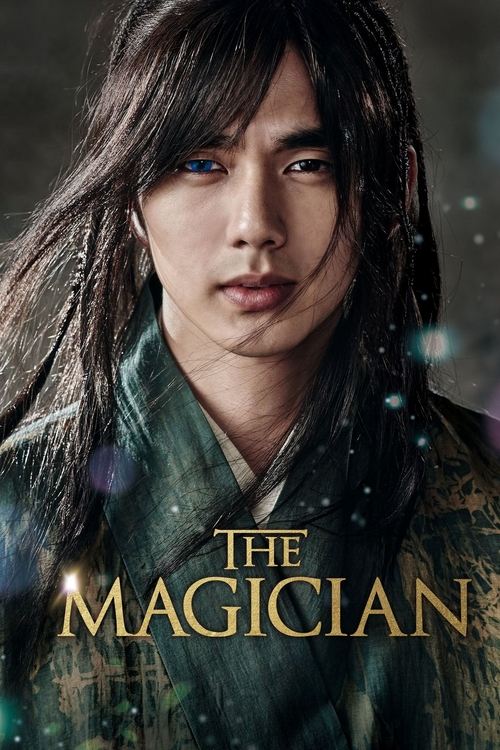
The Magician
Plot
A Princess in the Joseon Dynasty travels to the Qing Dynasty to marry. On the way to there, she meets a young magician and falls in love with him.
Get the Weekly Woke Watchlist
New and trending movies scored for woke bias, preachy messaging, and forced political themes — before you waste your evening.
No spam. One useful email per week.
Overall Series Review
Categorical Breakdown
The narrative conflict is driven by class difference and political destiny, focusing on the universal themes of forbidden love and personal choice, not on intersectional identity hierarchy. All characters are culturally and historically authentic to the Joseon/Qing setting. There is no vilification of 'whiteness' or forced insertion of diversity, as it is a Korean production with an entirely East Asian cast.
The film is a South Korean production set in the Joseon Dynasty. Its critique is confined to specific political maneuvering (the princess's forced marriage) within the Joseon court. The narrative does not express a fundamental self-hatred for the nation, its ancestors, or its culture. The conflict is with a villain from the Qing Dynasty and internal court conspiracy, containing no hostility towards Western civilization or its values.
The princess's primary struggle is to assert personal agency and choose her own partner over the politically arranged, unwanted marriage, which critiques historical patriarchal constraints. Her arc is about becoming 'strong-willed' and more assertive, but her liberation is achieved in complementary partnership with the male lead, who is a capable hero. The film focuses on a pure romance, not on anti-natalist messaging or portraying males as universally toxic or incompetent.
The movie is a straightforward period fantasy romance centered on a traditional male-female pairing. There is no presence of alternative sexualities, gender ideology, or a plot focus on deconstructing the nuclear family, which remains the normative structure within the historical setting.
The plot is a historical fantasy focusing on magic (stage illusion), political conspiracy, and romance. The movie does not engage with a critique of religion or faith, nor does it portray Christian or traditional religious figures as villains or bigots. The morality is objective, defined by the good-vs-evil conflict and the characters' commitment to their pure love.
Get the Weekly Woke Watchlist
New and trending movies scored for woke bias, preachy messaging, and forced political themes — before you waste your evening.
No spam. One useful email per week.