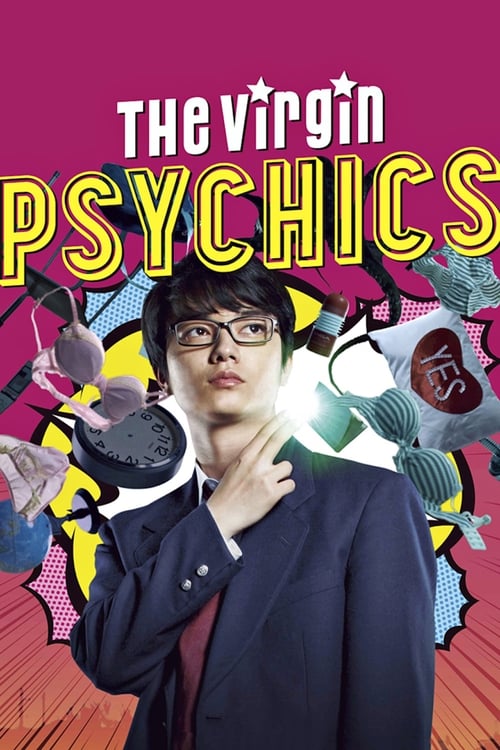
The Virgin Psychics
Plot
Shy high schooler Yoshirō and his friends mysteriously develop psychic powers, leading to chaotic and often erotic comedic situations as the virginal ESP teens try to understand their new gifts.
Get the Weekly Woke Watchlist
New and trending movies scored for woke bias, preachy messaging, and forced political themes — before you waste your evening.
No spam. One useful email per week.
Overall Series Review
Categorical Breakdown
The movie is a Japanese production with an entirely Japanese cast, set within a small Japanese town. The story is a localized, internal conflict with no plot elements concerning 'whiteness,' systemic oppression, or forced diversity. Characters are defined by their status as 'virgins' and their psychic powers, not by immutable characteristics or intersectional hierarchy. The casting is culturally authentic and colorblind to Western identity debates.
The setting is a small Japanese town, and the conflict involves a local group of psychics trying to protect their home from a supernatural threat (another psychic). There is no narrative component that expresses hostility toward Japanese culture, tradition, or ancestors. No outside or foreign culture is depicted as spiritually or morally superior to the main characters' home, and the institutions of the local community are the setting to be defended.
The gender dynamics are dominated by the male gaze, with the film utilizing repeated jokes based on female characters in revealing clothing and is full of erection gags. However, this is an expression of traditional sex comedy tropes, not modern 'Feminism' as defined by the 'Girl Boss' or anti-natalism. The female lead is not a 'perfect instantly' Mary Sue, and the central romantic quest is centered on the male protagonist finding his 'true love' and establishing a normative relationship. There is no anti-family or anti-natal messaging present in the plot.
The entire premise is based on the unfulfilled, heterosexual desires of a group of virgins, centering the traditional male-female pairing as the standard romantic objective. The main character's goal is explicitly to win the heart of a girl. While highly sexualized, the content revolves around normative sexual attraction and its comedic frustration. There is no deconstruction of the nuclear family, centering of alternative sexualities, or commentary on gender ideology.
The supernatural element—psychic powers from a cosmic event—is a science-fiction plot device and is not related to traditional religion. There is no depiction of Christian characters as villains or bigots. The moral stakes are simple, involving a choice between using power for good or for selfish, chaotic ends, which implies a simple objective good-vs-evil structure rather than moral relativism.
Get the Weekly Woke Watchlist
New and trending movies scored for woke bias, preachy messaging, and forced political themes — before you waste your evening.
No spam. One useful email per week.