One-Punch Man
Season 1 Analysis
Season Overview
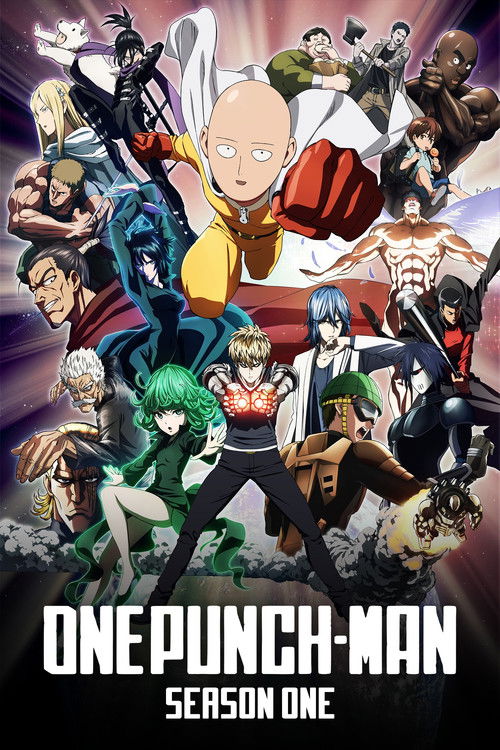
Saitama looks like an average guy, but his problem is anything but average. After training hard enough for all his hair to fall out, he's become so overwhelmingly powerful that no villain can stop him. The thing is, Saitama just does the hero thing for fun. When every enemy goes down with a single punch, it turns out that overwhelming power can be kind of... boring. Can a hero be too strong?
Season Review
Categorical Breakdown
The fundamental premise of the show is a universal meritocracy where a plain, balding man's hard work grants him ultimate power, and he is judged primarily by the content of his heroic actions, not his appearance or background. The villainous group, the Paradisers, are satirized as being 'anti work lobbyists' seeking a life of success without effort, which critiques an entitlement culture that runs counter to an intersectional lecture on privilege. The focus remains on individual effort and character over immutable characteristics.
The central critique is aimed at the bureaucracy and incompetence of the Hero Association and the hollowness of a painless, effort-free modern existence. The primary villains are monsters and aliens, or human scientists driven by a desire for 'ultimate' evolution. One villain, Vaccine Man, states a general 'humans are a disease' theme, which is a common, nonspecific anti-human trope. The story does not frame Japanese or Eastern culture, or its ancestors, as fundamentally corrupt or racist, focusing instead on themes of individual struggle and the need for purpose.
Female characters hold significant positions of power, notably the S-Class hero Tatsumaki, who is one of the world's most powerful beings. This subverts the 'men are all-powerful' trope. However, the powerful female characters are often depicted in a highly sexualized manner for comic effect or fan service. A dynamic is noted where the two most prominent female heroes, Tatsumaki and Fubuki, are sometimes shown in competition with one another. There is no overt anti-family or anti-natal messaging.
Alternative sexualities are a visible element among the high-ranking heroes, indicating a move away from a strictly normative structure. The S-Class hero Puri-Puri Prisoner is openly homosexual and a source of comic relief due to his exaggerated personality and actions. Additionally, the character Okamaitachi, one of the A-Class heroes and an elite disciple, is confirmed in supplementary official material as identifying as a transgender woman, placing this theme explicitly within the Hero Association ranks.
The narrative's central philosophical debate is secular, exploring the search for meaning, purpose, and self-actualization through effort, a theme Saitama struggles with after achieving his goal. The moral framework is generally objective, where hero-work (saving people) is good and monster-work (destroying cities) is bad, with Mumen Rider embodying pure, transcendent justice through effort. The story contains no overt criticism or vilification of traditional religion, and faith is not a source of conflict or strength for the main characters; the theme is one of spiritual vacuum focused on the human experience.