One-Punch Man
Season 3 Analysis
Season Overview
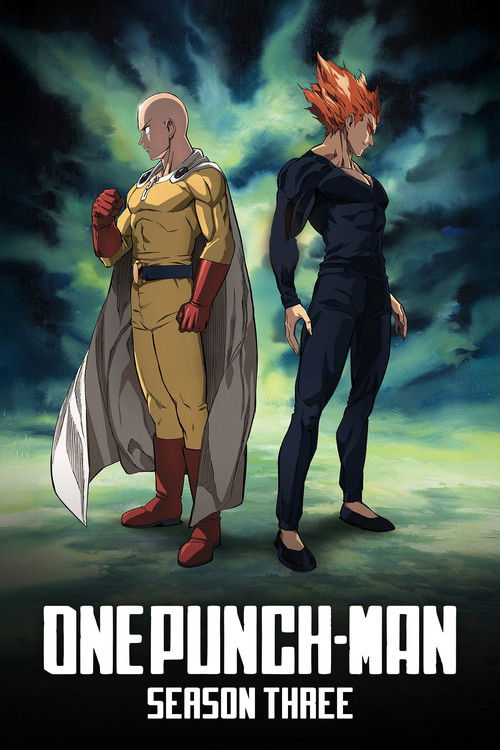
Alongside Genos, his faithful disciple, Saitama performs his official hero duties as a member of the Hero Association. One day, monsters claiming to be from the Monster Association suddenly appeared, taking a child of the Hero Association executive hostage. The S-class heroes gather and plan a raid on the Monster Association hideout to rescue the hostage. Meanwhile, Garou, a “human monster” who was taken by the Monster Association during a battle with the heroes, awakens in the Monster Association hideout.
Season Review
Categorical Breakdown
Characters are judged almost exclusively on their raw power and contribution to the defense of humanity against monsters, upholding a Universal Meritocracy.
The plot is a fundamental defense of human civilization (the Hero Association) against an existential threat (the Monster Association) that seeks its destruction, which is the antithesis of civilizational self-hatred.
Female heroes are powerful, high-ranking characters defined by their strength and skill. The score is a minor 2 due to a notable instance of a female hero's costume being censored/modified from the manga to be less revealing, indicating a small pressure to remove traditional female sexualization.
No centering of sexual ideology, deconstruction of the nuclear family, or lecturing on gender theory is present in the main narrative. A widely publicized single-frame animation error briefly misrendered a male villain with feminine features, which was immediately identified as a production mistake.
The world operates on a secular, utilitarian Hero Association structure. The conflict is a moral battle for survival that reinforces objective moral good (saving the innocent and humanity) without the inclusion or vilification of traditional religious belief systems.