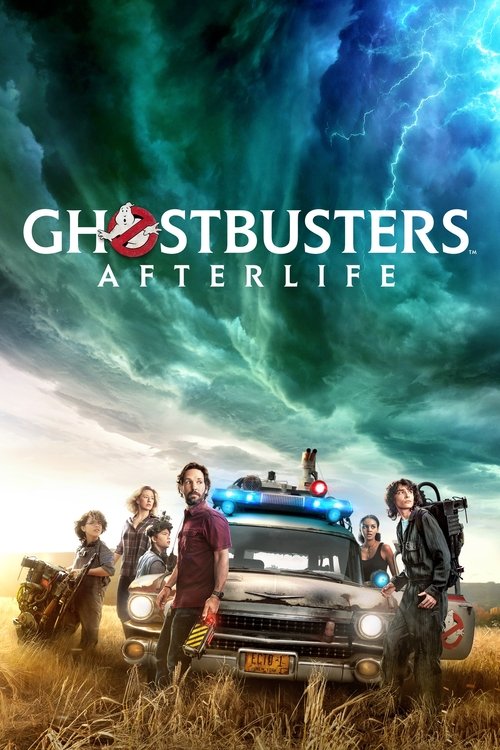
Ghostbusters: Afterlife
Plot
When single mom Callie and her two kids Trevor and Phoebe arrive in a small Oklahoma town, they begin to discover their connection to the original Ghostbusters and the secret legacy their grandfather left behind.
Get the Weekly Woke Watchlist
New and trending movies scored for woke bias, preachy messaging, and forced political themes — before you waste your evening.
No spam. One useful email per week.
Overall Series Review
Categorical Breakdown
The main children are a genius girl, Phoebe, and her mechanically inclined brother, Trevor, with their friend Podcast (played by an Asian-American actor) and Trevor's love interest Lucky Domingo (played by a Black actress) rounding out the new team. Character roles are determined by merit and specific skills; Phoebe's scientific aptitude is explicitly inherited from her white male ancestor, Egon Spengler. The film avoids any political lecturing on race or immutable characteristics.
The central plot is an act of extreme gratitude and ancestor worship, focusing on the children discovering and honoring the heroic and necessary sacrifice of their estranged grandfather, Egon Spengler. The story honors the institution of the family by showing its reconciliation. There is no deconstruction of Western heritage; the film is entirely respectful of the franchise's American origins and legacy.
The protagonist, Phoebe, is a highly competent girl-genius who takes the lead in ghost-busting, demonstrating strong female capability. However, she is never depicted as instantly perfect, and her success is directly tied to her scientific inheritance. Her brother, Trevor, plays a vital, complementary role with his mechanical expertise and driving the Ecto-1, and the mother's emotional arc with her deceased father is central. The male characters are not presented as bumbling or toxic, maintaining a complementary dynamic rather than an 'all-female vanguard' trope.
The primary romantic and relational arcs are normative, centering on the single mother, Callie, and her interest in the science teacher, Gary Grooberson, as well as the budding heterosexual relationship between the teenagers Trevor and Lucky Domingo. The film focuses on reconstructing the nuclear family unit following the grandfather's death. There is no centering of alternative sexualities, no visible gender ideology, and no political commentary on the nuclear family structure.
The conflict is an objective battle against a malevolent, ancient demon-god named Gozer and its cultist follower, Ivo Shandor. The battle is a clear moral struggle between good and evil. The film deals with the 'Afterlife' and the human spirit in a way that respects the existence of a spiritual realm, offering no hostility toward traditional religion or suggestion that morality is merely subjective power dynamics.
Get the Weekly Woke Watchlist
New and trending movies scored for woke bias, preachy messaging, and forced political themes — before you waste your evening.
No spam. One useful email per week.