DC's Legends of Tomorrow
Season 1 Analysis
Season Overview
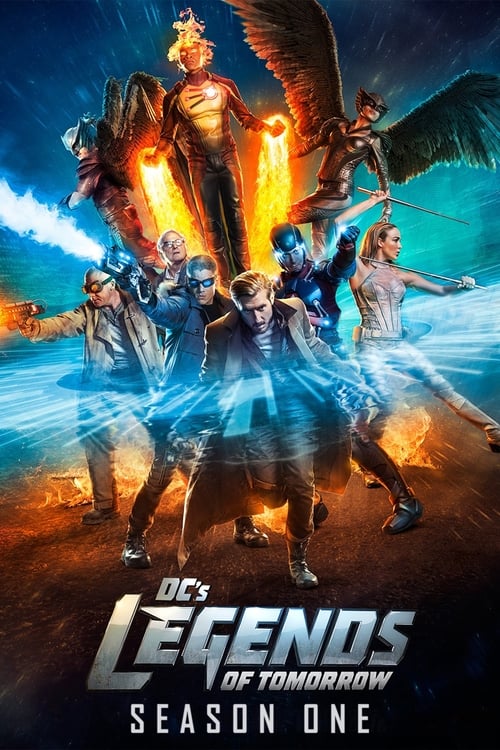
When heroes alone are not enough… The world needs legends. Having seen the future, traveling rogue Rip Hunter assembles a disparate group of both heroes and villains to confront the unstoppable threat of the immortal Vandal Savage- a threat which not only puts the planet at stake, but all of time itself. From the creators of The Flash and Arrow comes this super hero team-up that combines characters from both shows – in addition to new heroes from the DC Comics pantheon. Featuring Arrow’s Brandon Routh as The Atom and Caity Lotz as the resurrected Sara Lance/White Canary; with The Flash’s Victor Garber as Dr. Martin Stein alongside Wentworth Miller as Captain Cold and Dominic Purcell as Heat Wave; plus, the newest heroes Rip Hunter, Jeff Jackson and the reincarnated warrior queen Hawkgirl, this singular super hero spinoff series pits the ragtag team against one of the most powerful villains in the DC Comics universe.
Season Review
Categorical Breakdown
The cast is diverse by design, featuring a mix of races and backgrounds. Historical racism is addressed during trips to the 1950s and the Civil War era, but these moments serve as period-accurate obstacles rather than a commentary on contemporary society. Characters like Jax and Rip Hunter are judged by their actions and contributions to the team.
The mission is to preserve history and prevent a totalian future. The show treats various historical eras with a mix of curiosity and respect. It does not frame the Western past as a shameful legacy that needs to be dismantled, but rather as a timeline worth protecting from a genocidal immortal.
Sara Lance is a highly capable warrior, but she is not a 'Mary Sue' and possesses clear emotional flaws and a dark history. Kendra Saunders is central to the plot but relies on her past lives and partnership with Hawkman. Male characters like Ray Palmer and Leonard Snart remain competent, heroic, and essential to the team’s success.
Sara Lance is established as bisexual, and the show acknowledges her past relationships with women. This aspect of her character is integrated into her backstory and occasionally drives small subplots, particularly during a visit to the mid-20th century, but it does not serve as the primary focus of the season's narrative arc.
The show largely ignores traditional religion in favor of science fiction and ancient Egyptian mythology. While it doesn't openly attack Christianity, it replaces objective moral law with the authority of the 'Time Masters' and a focus on destiny, leaving a spiritual vacuum where traditional faith is absent.