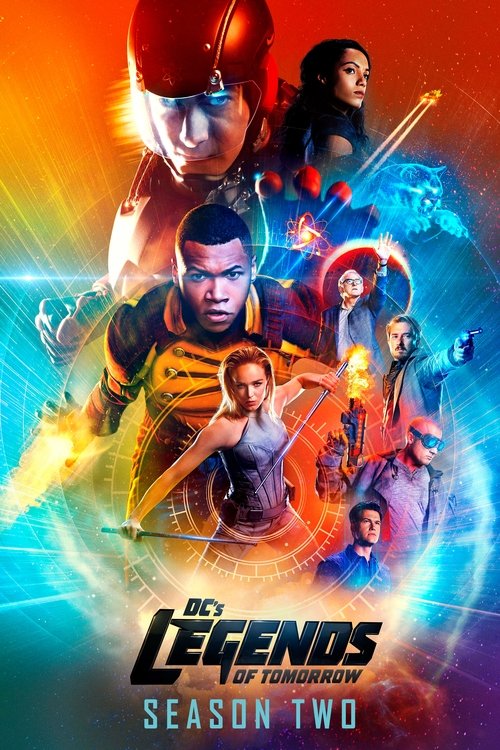
DC's Legends of Tomorrow
Season 2 Analysis
Season Overview
Season two amps up the firepower by enlisting both a league and a legion of new characters. Joining Rex Tyler aka Hourman will be other members of the Justice Society of America. And for every force of good, there is an opposing force of darkness. The Legends of Tomorrow will face off against the first ever team of Super-Villains: the Legion of Doom, including Malcolm Merlyn, Damien Darhk, Captain Cold and the Reverse Flash. After saving the world from Vandal Savage, the Legends of Tomorrow are now charged with protecting time (past, present and future) itself, taking them across history and up against a threat unlike any humanity has ever known.
Season Review
Categorical Breakdown
The narrative frequently pauses the action to address historical systemic oppression. Characters like Jax and Amaya are often defined by their racial identity, and the show uses historical settings like the American Civil War to frame 'whiteness' as a source of inherent conflict and bigotry.
The show treats Western history as a landscape of narrow-mindedness and systemic failure. The protagonists act as moral superiors who must educate their ancestors on proper modern values, framing the American past as something to be corrected rather than respected.
The season establishes a 'Girl Boss' hierarchy where Sara Lance is tactically and morally superior to all male teammates. Male characters like Ray Palmer and Nate Heywood are portrayed as childish and incompetent, while the previous male leader, Rip Hunter, is marginalized and humiliated.
The lead character's bisexuality is a central focus, often used to 'queer' historical time periods. Romantic subplots prioritize alternative sexualities, and the show frames these modern sexual dynamics as being at odds with 'stifling' traditional historical norms.
The season uses the Spear of Destiny—a significant Christian relic—as a generic magical power source, stripping it of its religious and spiritual context. Traditional faith is absent, replaced by a secular moral relativism where the Legends decide what is right for the timeline.