DC's Legends of Tomorrow
Season 3 Analysis
Season Overview
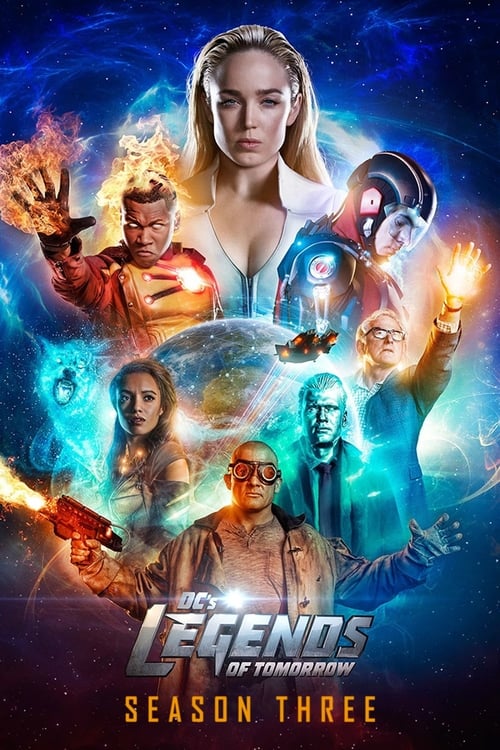
In season three, DC’s Legends of Tomorrow face a new existential threat created by their actions at the end of last season. By revisiting a moment in time they’d already participated in, they’ve essentially fractured the timeline and created anachronisms all across time! Our team must find a way to return all the anachronisms to their original timelines before the time stream falls apart. But before our Legends can jump back into action, Rip Hunter and his newly established Time Bureau call their methods into question and disband the team. Challenging the Time Bureau’s authority, they recruit a hacker from the future, Zari Tomaz and continue their time travelling shenanigans, while insisting that however messy their methods may be, some problems are beyond the Bureau’s capabilities. Some problems can only be fixed by Legends.
Season Review
Categorical Breakdown
The season introduces Zari Tomaz, whose character arc is defined by her identity as a Muslim woman in a dystopian future. Several episodes focus on historical racism and systemic oppression, often pausing the plot to lecture viewers on the privilege of past eras and the necessity of intersectional representation.
The narrative frequently frames the 'Time Bureau'—a structured, rule-following institution—as incompetent and stifling compared to the ragtag, diverse Legends. Historical Western settings are often portrayed as backdrops for bigotry that the modern characters must correct or endure with moral superiority.
Sara Lance is the undisputed 'Girl Boss' leader who never shows weakness, while male characters like Ray Palmer and Nate Heywood are primarily used for comic relief or emotional support. The season emphasizes female authority and independence, positioning motherhood and traditional family as secondary to career and individual freedom.
The relationship between Sara Lance and Ava Sharpe becomes a central narrative pillar. The show leans heavily into queer theory by centering alternative sexualities and making the lead character's bisexuality a frequent point of discussion and plot focus.
Traditional religion is replaced by secular 'magic' and ancient totems. The season finale features the team defeating a demon by conjuring a giant blue stuffed animal named Beebo, effectively turning a battle of good versus evil into a joke that mocks the seriousness of spiritual warfare and objective morality.