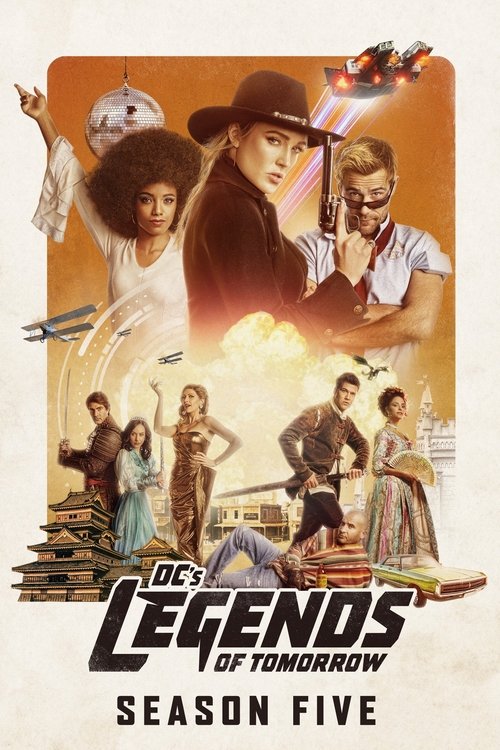
DC's Legends of Tomorrow
Season 5 Analysis
Season Overview
In season five, the Legends wrestle with changes to the timeline and themselves while trying to stop the "encores" of history's most infamous villains unleashed by Astra.
Season Review
Categorical Breakdown
The cast is curated to check every intersectional box, and character arcs frequently revolve around their cultural or social backgrounds. The introduction of 'Zari 2.0' focuses heavily on the vapid nature of modern influencer culture while simultaneously demanding respect for her 'marginalized' perspective.
Historical eras and figures are treated with contempt or irony. The show portrays Western history as a series of 'glitches' and villains that must be corrected by a modern, enlightened team. There is no reverence for the past, only a desire to parody it through a contemporary lens.
Women occupy every position of authority, from the Captain's chair to the Director of the Time Bureau. The male characters, such as Nate and Ray, are portrayed as bumbling, overly emotional, or intellectually subordinate to their female counterparts. Motherhood is treated as a secondary concern compared to career and personal 'freedom.'
Queer theory is the backbone of the season's interpersonal dynamics. The central romance is a lesbian couple, and several other main characters are openly bisexual or gender-fluid. These identities are not incidental; they are the primary lens through which the characters interact with the world and each other.
The season's primary antagonists are the Greek Fates, framing the concept of destiny or higher law as a tyrannical system that must be destroyed. Traditional religious morality is absent, replaced by a relativistic 'choose your own path' philosophy that treats any form of objective moral structure as oppressive.