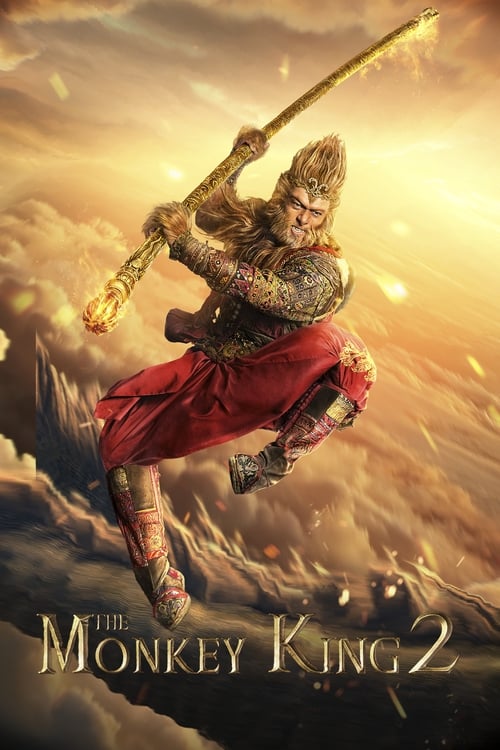
The Monkey King 2
Plot
Taking place 500 years after the Havoc in Heaven, the Tang Priest is appointed by Buddha to go to the West to fetch the sacred scriptures, only to accidentally free the Monkey King. With Lady White aiming to break up the team assembled to defeat her, the Monkey King must fight in order to save his world!
Get the Weekly Woke Watchlist
New and trending movies scored for woke bias, preachy messaging, and forced political themes — before you waste your evening.
No spam. One useful email per week.
Overall Series Review
Categorical Breakdown
The movie is a Chinese-produced adaptation of a foundational Chinese classic, featuring an entirely Chinese cast playing culturally authentic mythological and historical figures. The focus is entirely on character development, spiritual atonement, and moral conviction, operating within a universal meritocracy framework defined by the spiritual journey. The concept of vilifying 'whiteness' or forced diversity is absent.
The entire premise is a positive, heroic quest to acquire Buddhist scriptures in order to calm the natural order of the home culture. The film is a celebration and modern presentation of one of China's most significant cultural and literary legacies, *Journey to the West*. Institutions like the Buddhist faith and the pilgrimage itself are treated with respect as shields against demonic chaos.
The score is slightly raised because the primary antagonist, the White Bone Demon, is an extremely powerful and commanding female figure, which could be interpreted as a powerful 'Girl Boss' trope. However, she is explicitly the villain, driven by pure evil and the desire to abduct and use the life essence of children. The men in the group are not emasculated; Wukong is the strong, heroic protector, and Sanzang is the compassionate moral leader. The benign divine figure is the Goddess of Mercy (Guanyin).
The narrative is centered on a group of male pilgrims bound by a spiritual quest requiring celibacy. There is no presence of sexual ideology, alternative sexualities are not centered, and the film does not engage in deconstructing the nuclear family. The structure is entirely normative and focused on spiritual transformation.
The movie is profoundly theistic, focused on the Buddhist pilgrimage appointed by the Buddha and guided by the Goddess Guanyin. The central conflict addresses transcendent morality, comparing the simple recitation of moral law with the monk's ultimate understanding that one must 'lead by example' through selfless action. Faith and moral law are the source of the heroes' strength and purpose.
Get the Weekly Woke Watchlist
New and trending movies scored for woke bias, preachy messaging, and forced political themes — before you waste your evening.
No spam. One useful email per week.