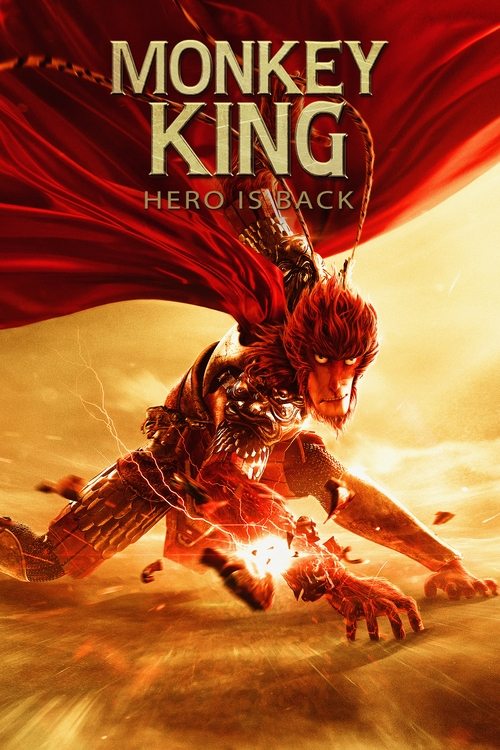
Monkey King: Hero Is Back
Plot
The all-powerful Monkey King once roamed freely between Heaven and Earth, but after angering the Gods, he was imprisoned within an ice cage deep within the mountains. 500 years later, monsters attack a small village and a child flees to the mountains. Unknowingly, the child releases the Monkey King from his curse. With the help and encouragement from this special child, Monkey King saves the village from the evil monsters.
Get the Weekly Woke Watchlist
New and trending movies scored for woke bias, preachy messaging, and forced political themes — before you waste your evening.
No spam. One useful email per week.
Overall Series Review
Categorical Breakdown
The movie is a Chinese-produced adaptation of a classic Chinese novel, featuring characters who are all mythological Chinese figures, which aligns with 'historically authentic' casting. The main hero's journey is a redemption arc that judges him solely on the content of his soul and his eventual self-sacrifice for the public good, which exemplifies universal meritocracy. There are no racial themes, 'race-swapping,' or vilification of 'whiteness.'
The movie is a clear expression of gratitude toward and celebration of its home culture, specifically Chinese mythology and folklore. The film is noted for blending advanced animation with rich cultural heritage and bolstering national sentiment, challenging Western film cultures. The conflict is between good and evil monsters, not a criticism of the protagonist's civilization or ancestors.
The core relationship is between a male protector (Monkey King) and a young boy (Liuer), though a baby girl is also rescued. Liuer's adopted father is a monk, and Liuer's birth mother sacrifices her life to save him, which frames motherhood as a noble, protective act. The narrative's focus on a male hero's protective masculinity and redemption from his arrogant past aligns with complementary gender roles. The main female presence is a minor demon shapeshifter who briefly takes a human woman's form.
The narrative centers entirely on a traditional fantasy-adventure plot involving a hero, a young male apprentice, and a pig demon. There is no presence of alternative sexual ideology, deconstruction of the nuclear family, or discussion of gender identity or transitioning. The structure maintains a normative focus on traditional male-female pairing as the standard, even if the main quest is between male figures.
The story is fundamentally rooted in Chinese mythology and religion, where the Monkey King's initial rebellion is against the 'Gods' (Heaven) and his punishment is meted out by the Buddha. The hero's regaining of his powers is directly linked to his adoption of a selfless, moral code—fighting for others rather than for himself—aligning with a 'Transcendent Morality' of duty and self-sacrifice. The morality is objective (protecting children from evil), not subjective 'power dynamics.'
Get the Weekly Woke Watchlist
New and trending movies scored for woke bias, preachy messaging, and forced political themes — before you waste your evening.
No spam. One useful email per week.