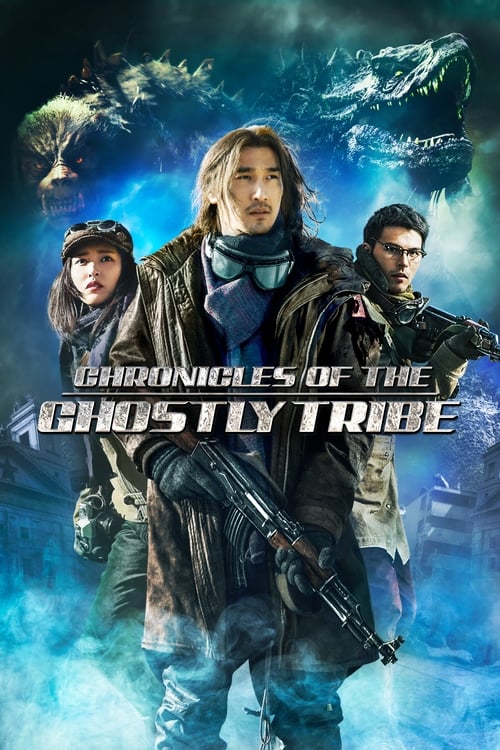
Chronicles of the Ghostly Tribe
Plot
In 1979, a young soldier is working in China's snowcapped mountains when an explosion reveals bizarre fossils hidden deep in the mountain caverns. What they discover next will change his life and human history forever.
Get the Weekly Woke Watchlist
New and trending movies scored for woke bias, preachy messaging, and forced political themes — before you waste your evening.
No spam. One useful email per week.
Overall Series Review
Categorical Breakdown
The story is Sino-centric, featuring an entirely Chinese cast and drawing on Chinese folklore and secret history. There is no political theme relating to race or forced diversity, nor is there any vilification of 'whiteness' or historical 'race-swapping.' The main character, Hu Bayi, is a soldier/worker whose journey is based on personal conviction and merit, embodying a universal hero archetype.
The film’s setting in 1979, just after the Cultural Revolution, contains a small, subtle commentary through its depiction of 'government-mandated plastic smiles' and 'thinly veiled propaganda' during the Red Army scenes. This suggests a mild, localized critique of a specific historical period in the home culture. However, the core plot is a nationalistic fantasy that re-mythologizes ancient Chinese history with aliens and monsters, ultimately celebrating a mystical past rather than demonizing the overall heritage.
The core of the plot is driven by the male protagonist, Hu Bayi, and his quest to save his lost love, Yang Ping, representing a traditional male protective role. The female lead, Yang Ping/Shirley, is a scientist's daughter and later a mysterious, powerful figure connected to the alien race, central to the story’s mystery and action. She is not a 'Girl Boss' who instantly surpasses all male characters, as her power is tied to the supernatural plot device, allowing for a dynamic where men and women have distinct but complementary roles.
The narrative focuses on a classic, traditional male-female romantic quest and does not feature any alternative sexualities, gender ideology, or deconstruction of the nuclear family. The presentation of relationships adheres to a normative structure without any political lecturing.
The conflict is entirely focused on a clear-cut good-versus-evil battle against mythological alien beasts, ancient curses, and a 'Demon Pagoda.' The film operates purely within a supernatural and mythological framework, making no critique of organized religion, specifically Christianity. Morality is objective, based on protecting humanity from a tangible, ancient evil.
Get the Weekly Woke Watchlist
New and trending movies scored for woke bias, preachy messaging, and forced political themes — before you waste your evening.
No spam. One useful email per week.