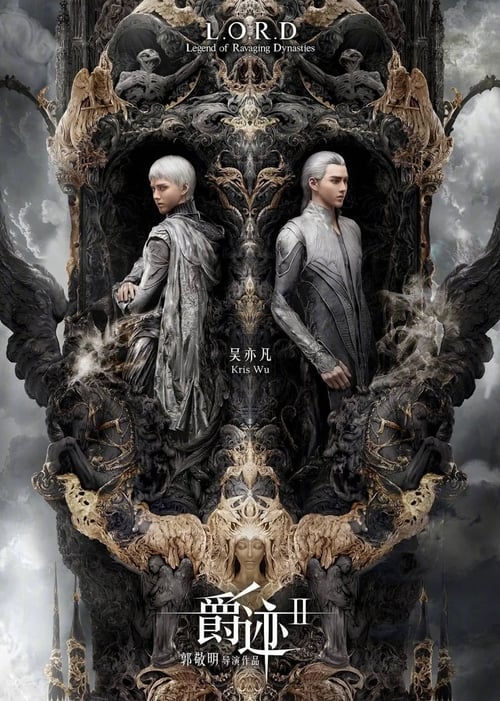
L.O.R.D: Legend of Ravaging Dynasties
Plot
Based on the novel of the same name, the film depicts the endless battles of four kingdoms as they fight for power and domination of the one ultimate realm.Based on his 2 beloved fantasy novels with 6 million copies sold, L.O.R.D is acclaimed writer and director Guo Jingming’s follow up to his Tiny Times films. The action-adventure odyssey is set in a world of warring Sorcerers, Lords and Beasts. The first CGI Film to come from China
Get the Weekly Woke Watchlist
New and trending movies scored for woke bias, preachy messaging, and forced political themes — before you waste your evening.
No spam. One useful email per week.
Overall Series Review
Categorical Breakdown
The film's casting is entirely East Asian, and the story is set in a self-contained Chinese fantasy universe, meaning it does not engage with Western-centric race politics or the vilification of 'whiteness.' Character conflict is based on magical ability, rank, and a vast conspiracy, which constitutes a system of universal meritocracy based on power levels, not on immutable, real-world characteristics.
The movie is a Chinese production, and its focus is on an internal civil war and a conspiracy within its fictional empire, the Aslan Empire. The film critiques the corruption of the fictional governing body and its power structure. This narrative does not express hostility toward Western civilization or Chinese ancestry, which keeps the score low, as the central definition of Civilizational Self-Hatred is not met.
Female characters hold powerful positions as 'Lords' and 'Disciples' within the system of power, with one woman achieving the unprecedented rank of 'Double Lord.' These characters are instantly capable and central to the conflict, which aligns with the 'Girl Boss' trope of female exceptionalism. The general aesthetic features a highly metrosexualized male cast, which critics noted for its 'sexlessness,' though this does not directly frame males as bumbling or toxic. There is no messaging explicitly against motherhood or family structure.
The intimate and emotionally charged bond between the main male Lord, Yin Chen, and his male Disciple, Qi Ling, is heavily emphasized through soft looks and longing stares, which critics explicitly read as classic homosexual romance subtext. A scene detailing the 'Exchange of Soul Route' features alluring, homoerotic staging, including a partial striptease, effectively centering an alternative sexuality theme in the core relationship dynamic, despite the need for ambiguity to pass censorship.
The supreme governing body, represented by the 'Priests' and the 'Silver Priest,' are depicted as the architects of a secret conspiracy against the Lords and Disciples. This frames the highest spiritual and administrative authority in the fictional world as fundamentally corrupt and antagonistic. The system of divine power is therefore portrayed as a facade for wicked, self-serving power dynamics, rather than a source of transcendent morality.
Get the Weekly Woke Watchlist
New and trending movies scored for woke bias, preachy messaging, and forced political themes — before you waste your evening.
No spam. One useful email per week.