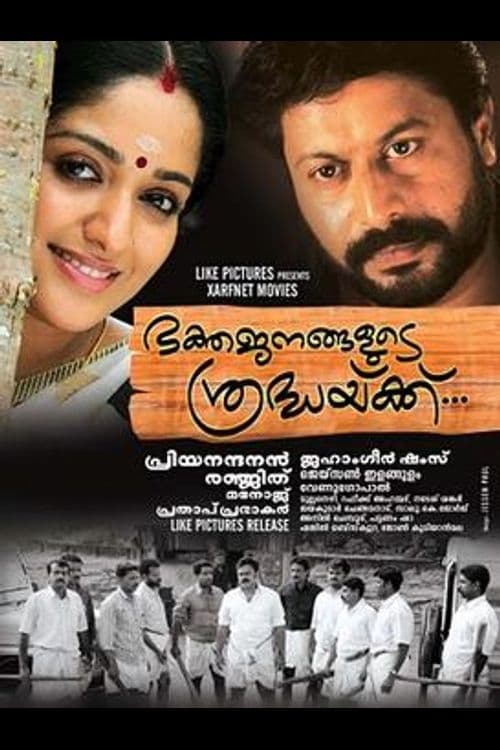
Bhakthajanangalude Sradhakku
Plot
The film narrates the story of a self-declared demi-god and her alcoholic husband. It is reportedly inspired from the life of the controversial godwoman Divya Joshi.
Get the Weekly Woke Watchlist
New and trending movies scored for woke bias, preachy messaging, and forced political themes — before you waste your evening.
No spam. One useful email per week.
Overall Series Review
Categorical Breakdown
The plot focuses on a domestic crisis stemming from a husband's alcoholism, not on race, caste, or intersectional power dynamics. The character's merit or lack thereof is the defining factor in the conflict. The casting is culturally authentic to the setting, making intersectional concerns irrelevant.
The narrative critiques corruption within a specific cultural institution, namely the commercialization and exploitation of traditional religious faith. It does not demonize the core local culture, ancestors, or fundamental national institutions. The satire is an internal critique of social pathology.
The narrative is female-oriented, showing the wife as the empowered protagonist who takes drastic action to fix the family. The husband is depicted as a bumbling, abusive alcoholic, which constitutes a clear emasculation of the male character due to his personal failings. The woman's ultimate motivation, however, is to preserve the nuclear family, which significantly moderates the score.
The story is strictly centered on the traditional nuclear family structure, involving a heterosexual married couple and their children. There is no presence of alternative sexualities, queer theory, or gender ideology in the primary conflict or supporting roles. Sexuality remains a private matter.
The film's satire is directed at the deceitful practices of a self-declared godwoman—who is exposed as a fraud—and the gullibility of the masses. The critique targets the commercial exploitation of faith and superstition, defending objective truth and moral conduct over religious fakery, rather than attacking traditional religion itself.
Get the Weekly Woke Watchlist
New and trending movies scored for woke bias, preachy messaging, and forced political themes — before you waste your evening.
No spam. One useful email per week.