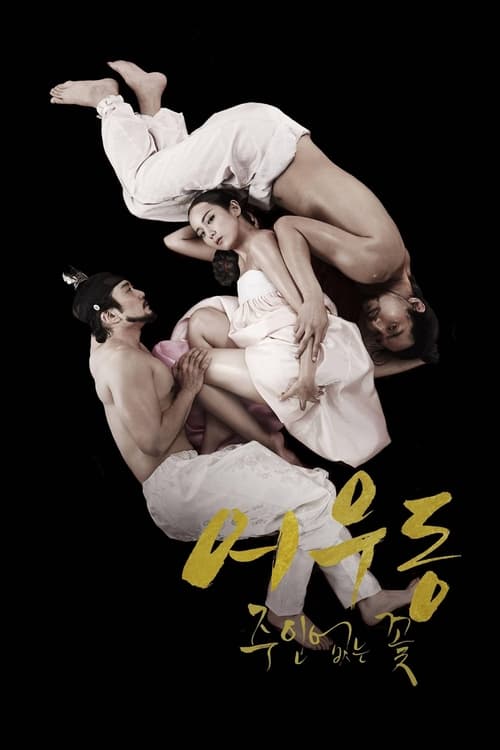
Lost Flower: Eo Woo-dong
Plot
A triangular relationship between Eo Woo-dong, her husband Lee Dong, and fantasy character Moo-gong, highlights on the first half of the Joseon Dynasty and portrays the contradicted life of the high class people, criticizing the modern day Korean society.
Get the Weekly Woke Watchlist
New and trending movies scored for woke bias, preachy messaging, and forced political themes — before you waste your evening.
No spam. One useful email per week.
Overall Series Review
Categorical Breakdown
The plot's central conflict relies on the systemic oppression of the protagonist's identity as a high-class woman in Joseon society. The narrative functions to lecture on the power imbalance and gender inequality imposed by the patriarchal Yangban class. The privileged male figures are depicted as hypocritical and oppressive, exemplified by the husband's constant infidelity.
The film frames the ancestral Korean civilization of the Joseon Dynasty, specifically its strict Confucian social and moral systems, as fundamentally corrupt and a 'prison' that stifles human freedom. The historical setting is used to criticize the 'high class people' and implicitly the rigid structure of the Korean past, which is a strong form of civilizational self-hatred.
The female lead is a 'symbol of rebellion' who finds her role as a wife to be a 'prison of rules'. She rejects the anti-autonomy message of the era by pursuing life on her own terms and exercising her sexual agency. Her husband is portrayed as a bumbling, emotionally neglectful, and toxic adulterer.
The core plot is focused on the oppression and rebellion within a traditional male-female marriage through infidelity and a love triangle. The narrative does not center on alternative sexualities, deconstruct the concept of the nuclear family beyond critiquing the oppressive reality of her specific marriage, or promote gender ideology.
The film is a direct attack on the official, state-mandated Confucian moral systems of the Joseon era, framing them as a source of hypocrisy and evil. The narrative elevates the protagonist's subjective, individual desire and freedom over the objective moral law enforced by the society, implicitly embracing moral relativism as a means of liberation.
Get the Weekly Woke Watchlist
New and trending movies scored for woke bias, preachy messaging, and forced political themes — before you waste your evening.
No spam. One useful email per week.