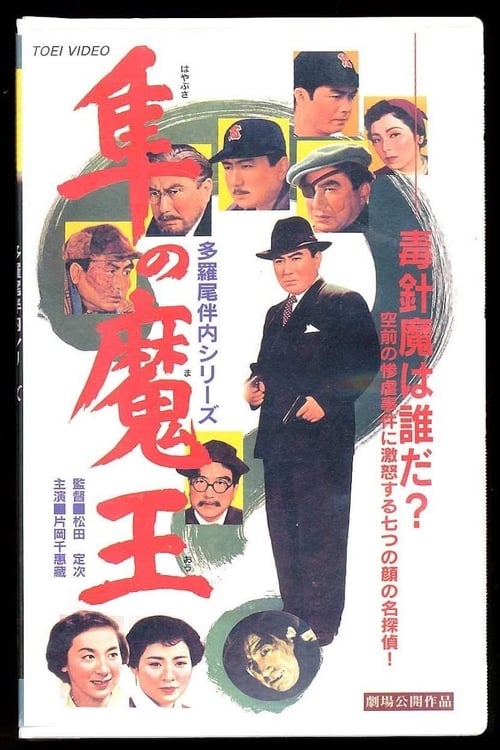
Foul Play
Plot
Private eye Bannai Tarao (Chiezo Kataoka) and his assistant Masako (Chizuru Kitagawa) investigate the mysterious murder of a baseball player who was killed in the middle of a game.
Get the Weekly Woke Watchlist
New and trending movies scored for woke bias, preachy messaging, and forced political themes — before you waste your evening.
No spam. One useful email per week.
Overall Series Review
Categorical Breakdown
The plot is a simple murder investigation and relies on the private eye’s skill and universal principles of justice. There is no focus on race, privilege, or a vilification of whiteness, as the film is a 1955 Japanese production set in Japan. Character merit, in the form of detection, is paramount.
The film is a mystery genre piece focused on solving a crime within Japanese society. The narrative does not contain hostility toward Western civilization, demonization of ancestors, or framing home culture as fundamentally corrupt, staying neutral to positive on core institutions necessary for the detective's work.
The female character, Masako, is presented as the assistant to the male private eye. This complementary role structure is typical of the 1950s and does not feature a 'Girl Boss' Mary Sue trope or actively seek to emasculate the male lead. The focus is on their professional partnership in a traditional context.
As a 1955 murder mystery, the film focuses on crime and detection. The narrative does not center sexual identity, deconstruct the nuclear family, or promote contemporary gender ideology. The structure adheres to a normative presentation of social life.
The film is a secular crime procedural. It does not engage in hostility toward religion, frame traditional religion (specifically Christianity) as the root of evil, or promote moral relativism. The resolution of the crime is based on objective truth and a clear moral law against murder.
Get the Weekly Woke Watchlist
New and trending movies scored for woke bias, preachy messaging, and forced political themes — before you waste your evening.
No spam. One useful email per week.