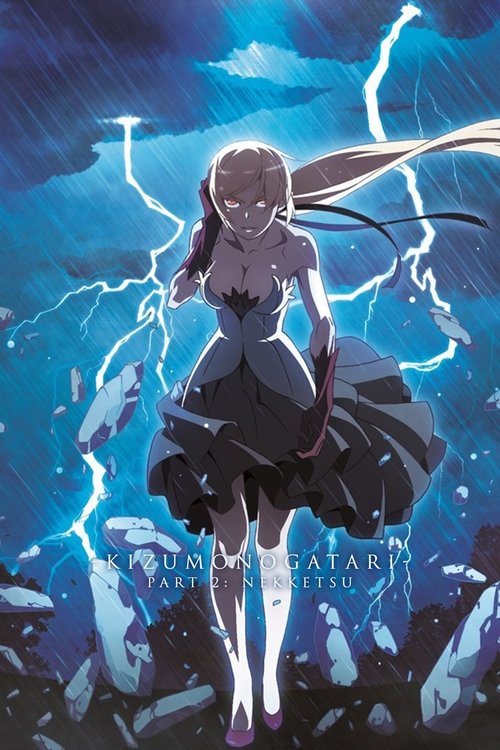
Kizumonogatari Part 2: Nekketsu
Plot
Koyomi Araragi was turned into a vampire by the legendary vampire, Kiss-shot Acerola-orion Heart-under-blade, and he needs to revive the weakened vampire back to her complete form to return to being human again. The only way for Koyomi to achieve his goal is to fight the three vampire hunters – Dramaturgy, Episode and Guillotinecutter.
Get the Weekly Woke Watchlist
New and trending movies scored for woke bias, preachy messaging, and forced political themes — before you waste your evening.
No spam. One useful email per week.
Overall Series Review
Categorical Breakdown
Characters are judged by their actions and moral intent, not by immutable characteristics like race or their supernatural designation, as the human antagonist is the most contemptible. The narrative centers on a moral struggle between humanity and monstrosity, which is a universal and individual choice.
The protagonist's core motivation is to return to his life as a human and protect his friend, framing the ordinary world as the desirable state. The film focuses on existential identity questions rather than a critique of the surrounding culture or national heritage.
The female secondary lead, Tsubasa Hanekawa, is a highly intelligent, proactive figure who actively involves herself in the conflict, defying the protagonist's attempts to sideline her. The narrative also includes elements of fan service and Tsubasa is ultimately incapacitated and kidnapped, requiring the male lead to abandon his humanity to save her, reinforcing a traditional protective male role.
The story exclusively focuses on the developing heterosexual dynamics between the male protagonist and the female characters, Kiss-shot and Tsubasa Hanekawa. There is no presence of alternative sexual identity representation or commentary on gender ideology.
The final antagonist, Guillotinecutter, is identified as a fully human priest, a religious figure whose actions—kidnapping and ruthlessness—are portrayed as the most inhuman and morally monstrous. Another hunter wields a giant silver cross, presenting symbols and figures of traditional religion in an antagonistic context.
Get the Weekly Woke Watchlist
New and trending movies scored for woke bias, preachy messaging, and forced political themes — before you waste your evening.
No spam. One useful email per week.