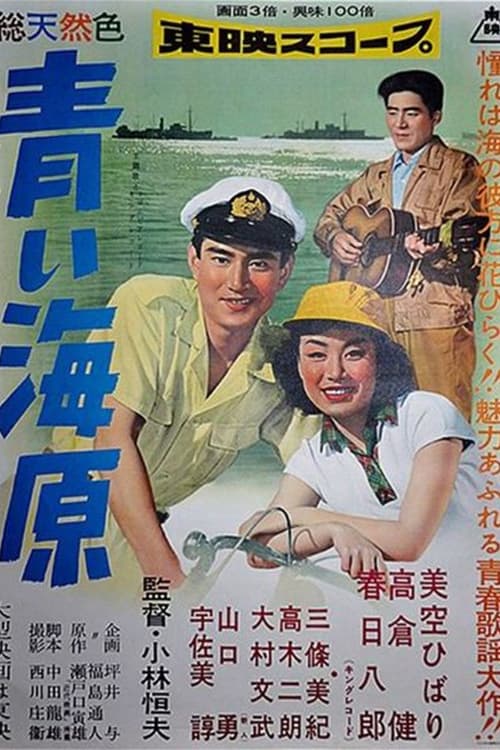
The Deep Blue Sea
Plot
To fulfill a friend’s dying wish, a young sailor Kenji takes on the task of delivering an heirloom to his friend’s daughter, Harumi, who has been adopted by another family. When he arrives, Kenji soon discovers that Harumi and her adopted family are the targets of an evil gang boss. In an attempt to help them, he decides to take matters into his own hands.
Get the Weekly Woke Watchlist
New and trending movies scored for woke bias, preachy messaging, and forced political themes — before you waste your evening.
No spam. One useful email per week.
Overall Series Review
Categorical Breakdown
The narrative is set in a specific Japanese cultural context, focusing entirely on Japanese characters (Kenji, Harumi, Sakazaki). Character conflict is purely based on individual merit and moral behavior (noble protector vs. evil gangster). The film contains no elements of Western identity politics, race-based hierarchy, vilification of 'whiteness,' or forced insertion of diversity. Casting is historically and culturally authentic.
The film is a Japanese production focused on an internal Japanese struggle (sailors, port life, yakuza). The villain is a 'sleazy yakuza tough guy' and a 'lecherous gangster,' representing a critique of localized crime, not a condemnation of Japanese civilization, ancestors, or core institutions. There is no hostility toward Western civilization or promotion of civilizational self-hatred.
The gender dynamic is strictly complementary, centering on Kenji as the 'noble protector' who sacrifices himself for Harumi. Harumi is a working woman at a bar who is victimized and requires rescue from the lecherous gangster. The film’s focus is on the 'central romance' and the protective role of the male, which is antithetical to the 'Girl Boss' trope and male emasculation. The score is only slightly above the minimum due to the portrayal of the female lead as a figure who is primarily protected rather than actively autonomous.
The narrative centers on a traditional 'central romance' between the male sailor, Kenji, and the female bar worker, Harumi. The focus is exclusively on the normative structure of a male-female pairing. The plot contains no references, themes, or lecturing related to alternative sexualities, gender theory, or deconstruction of the nuclear family structure.
The plot's primary conflict is a classic moral struggle between the virtuous, self-sacrificing hero Kenji and the morally bankrupt villain Sakazaki. The story acknowledges an objective moral truth where good and evil are clearly defined. There is no apparent hostility toward religion (Christianity or otherwise) or an embrace of moral relativism; the hero's actions are driven by duty and honor.
Get the Weekly Woke Watchlist
New and trending movies scored for woke bias, preachy messaging, and forced political themes — before you waste your evening.
No spam. One useful email per week.