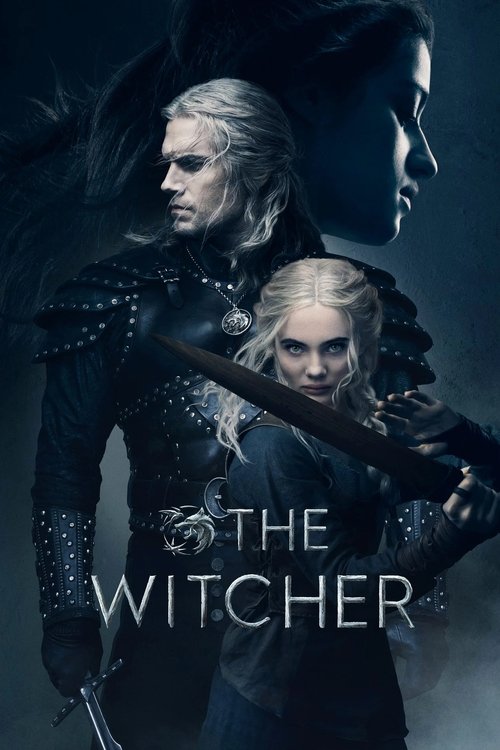
The Witcher
Season 2 Analysis
Season Overview
Geralt embraces his destiny as he protects Ciri from the forces battling for control of the Continent — and from the mysterious power she possesses.
Season Review
Categorical Breakdown
The casting intentionally employs widespread "race-swapping" for core characters like Fringilla, as well as groups like the Elves and Dryads, where the show’s creative team explicitly cast to challenge the predominantly white nature of fantasy worlds, overriding the source material’s plot-relevant character descriptions and Slavic/Central-Eastern European setting. The narrative also frames the conflict between humans and Elder Races through a lens resembling contemporary discussions of colonialism and systemic oppression, drawing parallels between the Elder Races and abused minorities. This prioritizes the presentation of real-world identity dynamics over organic world-building or fidelity to the original text’s themes of non-human racism, pushing the score high toward forced diversity and identity over merit.
The series alters the tone of the Central-Eastern European-inspired source material by superimposing an American-style intersectional framework onto the world. The Northern Kingdoms, which serve as the proxy for the home civilization, are consistently shown as corrupt and oppressive, particularly toward the Elder Races. Elves are depicted with imagery suggesting a Noble Savage trope, being the ecologically and spiritually purer marginalized victims of human (the civilization proxy) bigotry. While not a direct demonization of real-world ancestors, the fictional equivalent of "home culture" is framed as the fundamentally bigoted, colonizing force.
The female leads are consistently powerful, fulfilling the "Girl Boss" archetype of strength and agency. However, the season's core plot for Yennefer, a historically powerful and uncompromising sorceress, focuses on her loss of power and subsequent anguish, which some critics saw as a thematic disempowerment or a regression into vulnerability. The narrative highlights her despair over being infertile, which has been interpreted as messaging that career/power is unfulfilling without motherhood, running counter to anti-natal themes. The score reflects the duality: strong female characters are abundant, but the narrative choices for the lead sorceress in Season 2 are perceived as a deconstruction of her non-maternal, self-sufficient strength.
The season sets up the on-screen exploration of canonically lesbian and bisexual characters, including the introduction of the lesbian sorceress Philippa Eilhart, and continues to heavily queer-code Jaskier. Although the main hero's relationship is kept strictly heterosexual despite fan pressure, the show actively includes and normalizes alternative sexualities, moving away from a strictly normative structure. The presence of these elements is a deliberate feature of the adaptation, indicating a higher focus than 'sexuality is private.'
The world of The Witcher naturally operates in a moral vacuum, where objective truth and higher moral law are generally absent, leaning towards a brutal, individualistic moral code (Geralt’s). The show is criticized for simplifying the source material's philosophical and moral gray areas into clear-cut good and evil, replacing genuine moral complexity with simplistic choices. While there is no overt anti-Christianity, the political and religious institutions shown are routinely corrupt or self-serving, and the overall moral landscape is one of subjective, individual ethics, aligning with the "Spiritual Vacuum" aspect of the category.