The Witcher
Season 3 Analysis
Season Overview
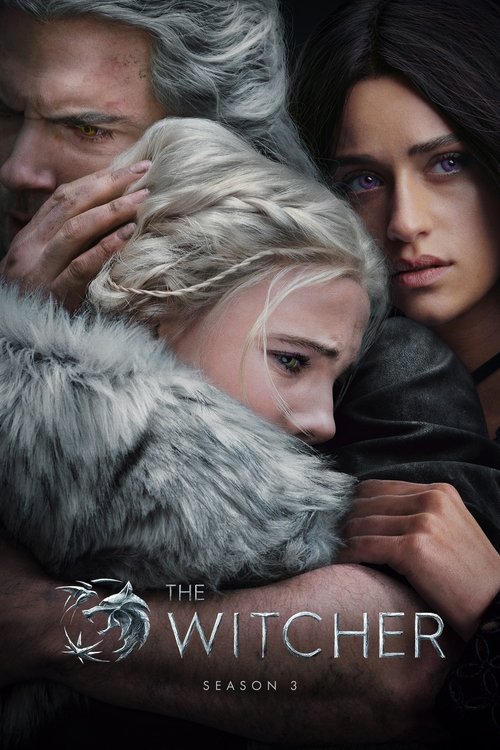
Destiny brought them together. Dangerous forces are trying to tear them apart. Geralt and Yennefer fight to keep Ciri safe as war brews on the Continent.
Season Review
Categorical Breakdown
The show's casting director admitted to embracing identity politics to influence the audience's 'unconscious bias' and 'affect change' in their view of diversity. The show maintains a deliberate colorblind approach to characters from a Central-Eastern European folklore setting, leading to 'race-swapped' characters whose original appearance was relevant to their personal narrative in the books. The narrative frames the conflict largely as systemic human (white-coded) oppression against non-humans, relying on race and species as the primary conflict driver rather than character merit or political ideology alone, favoring the victim-oppressor hierarchy.
The political landscape of the Northern Kingdoms, which represent the 'home' Western-style civilization, is overwhelmingly portrayed as fundamentally corrupt, incompetent, and driven by self-serving warmongers and scheming sorcerers. The Elves, a non-human/non-Western culture, are depicted as a systemically oppressed group struggling for survival, leaning into the Noble Savage trope as the spiritually superior victims of human corruption. The primary human institutions, monarchy and the organized church, are showcased as forces of bigotry and malice.
The core of the plot focuses on the power and agency of Yennefer and Ciri, with Geralt, the main male lead, increasingly sidelined to a secondary, protective role. The Lodge of Sorceresses and the entire magical academy are run and dominated by powerful, hyper-competent women who drive the political plot. The show changes the established canon that sorceresses use magic to become peak physical beauties, inserting characters who defy traditional standards to meet a diversity 'quota,' prioritizing modern body-positivity messaging over internal world-building logic.
Alternative sexualities are prominently centered with the introduction of a new gay romance between Jaskier and Prince Radovid. The character of Jaskier, previously established as a womanizer, is retconned as homosexual or pansexual, making sexual identity a newly significant plot element. The relationship between the spymasters, Philippa and Dijkstra, is explicitly defined using modern BDSM kink terminology, which is then made public knowledge, suggesting a move to center sexual ideology over normative structure.
The most significant organized religion, the Church of the Eternal Fire, is consistently and explicitly framed as a source of corruption, fanaticism, and brutality, using its faith to justify 'witch hunts' and 'racially-motivated murder,' directly mirroring dark periods of Western religious history (e.g., the Crusades). The main protagonists, Geralt and Yennefer, are explicitly shown as materialists who do not believe in gods, viewing them as mere monsters or tricks that fool the naive. Organized faith is thus depicted as either a cynical tool for evil or a crutch for the foolish.