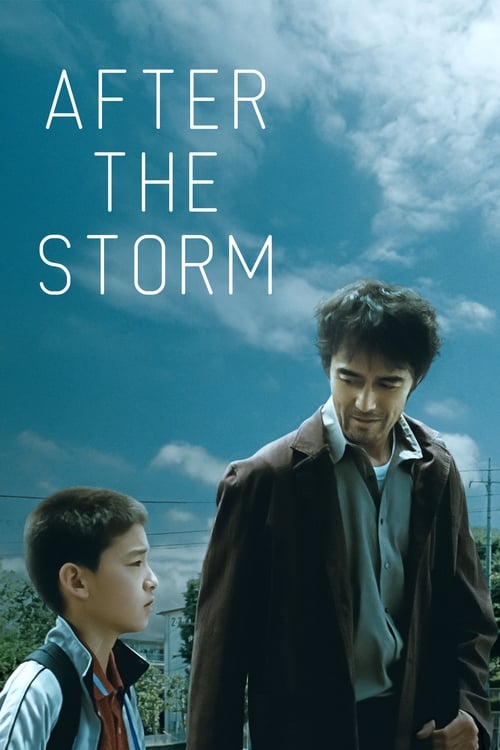
After the Storm
Plot
Ryota is an unpopular writer although he won a literary award 15 years ago. Now, Ryota works as a private detective. He is divorced from his ex-wife Kyoko and he has an 11-year-old son Shingo. His mother Yoshiko lives alone at her apartment. One day, Ryota, his ex-wife Kyoko, and son Shingo gather at Yoshiko's apartment. A typhoon passes and the family must stay there all night long.
Get the Weekly Woke Watchlist
New and trending movies scored for woke bias, preachy messaging, and forced political themes — before you waste your evening.
No spam. One useful email per week.
Overall Series Review
Categorical Breakdown
The narrative is centered on the personal failings and universal emotional struggles of a middle-aged man in Japan, not on race, class, or systemic oppression. Characters are judged by their individual moral choices and personal merit; the protagonist is a 'screw-up' due to his own actions (gambling, irresponsibility), not because of his immutable characteristics. There is no vilification of 'whiteness' or forced diversity, as the cast is uniformly Japanese and the themes are cultural and familial.
The film acts as a respectful, albeit understated and melancholic, portrait of contemporary Japanese family and neighborhood life. It gently observes the everyday struggles like social isolation and an aging population but frames them with warmth, humor, and a deep humanism. The setting and culture are showcased authentically without demonization; core institutions like family are the central focus, viewed as a source of necessary, though complicated, connection.
The male lead, Ryota, is presented as deeply flawed: he is irresponsible, a gambler, financially unstable, and spies on his ex-wife. The female characters—the ex-wife Kyoko and the mother Yoshiko—are the pragmatic, wise, and grounded figures who are holding the family unit together. While the primary male is emasculated by his own failure and the women exhibit strong independence (Kyoko planning her life), they are not 'Mary Sue' figures and the overall dynamic explores the complexity of divorced parenting, not a general condemnation of masculinity or a 'motherhood is a prison' theme.
The film centers on a conventional family structure that has been disrupted by divorce. The narrative's focus remains strictly on the heterosexual male-female pairing and the nuclear family unit (even if fragmented). There is no inclusion or centering of alternative sexual identities, deconstruction of gender as an ideology, or lecturing on sexual politics.
The movie is a secular family drama rooted in a humanistic and naturalistic style. The moral law in the film is derived entirely from personal responsibility, familial duty, and universal human truths about life's disappointments. Faith and religion are not significant themes, and there is no presence of anti-theistic messaging, hostility toward Christianity, or advocacy for moral relativism.
Get the Weekly Woke Watchlist
New and trending movies scored for woke bias, preachy messaging, and forced political themes — before you waste your evening.
No spam. One useful email per week.