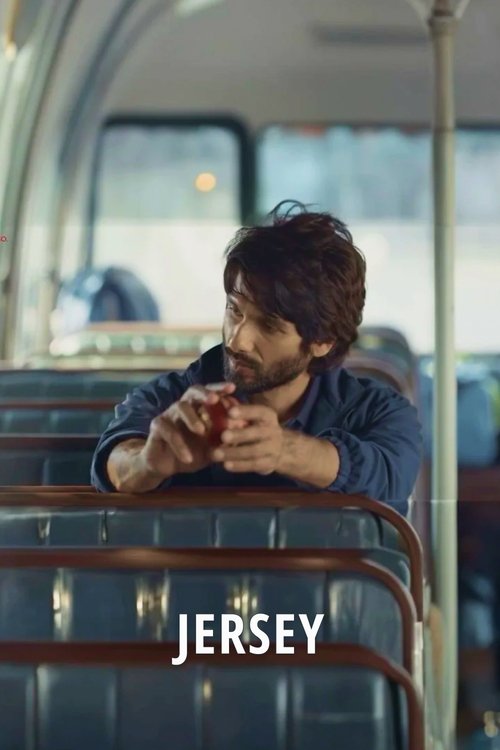
Jersey
Plot
An ex-cricketer struggling to make ends meet, wants to fulfill his child's wish of getting an Indian jersey but in the process comes face to face with his heroic past and is forced to decide if he will rise to the occasion and become a symbol of hope or continue to live a life as a loser?
Get the Weekly Woke Watchlist
New and trending movies scored for woke bias, preachy messaging, and forced political themes — before you waste your evening.
No spam. One useful email per week.
Overall Series Review
Categorical Breakdown
The plot's central conflict revolves entirely around the protagonist's personal financial struggle and his merit as a cricketer, not on race, caste, or immutable characteristics. Character judgment is based on the content of their soul and competence (or lack thereof), falling under the classic universal meritocracy trope. There is no element of 'whiteness' to vilify or forced insertion of diversity, as the setting is culturally specific.
The film’s entire emotional engine is the hero’s quest to don the national team jersey, which is presented as a symbol of national and personal honor. The narrative respects the institutions of family and the importance of a father's role. There is no depiction of Indian culture or civilization as fundamentally corrupt or racist, and no civilizational self-hatred is present.
The wife, Vidya, is a strong, working woman who is the primary financial provider for a decade, which reverses the traditional breadwinner dynamic. However, this dynamic is a source of tension and realism, not a 'Girl Boss' lecture on male incompetence. The husband is heavily flawed and irresponsible due to his ego, but the story's ultimate goal is his redemption as a father and husband, affirming the complementary value of a male figure. Motherhood is shown as a vital, high-stakes role, not a 'prison.'
The narrative's focus is exclusively on the traditional male-female pairing and the nuclear family unit (father, mother, son). There is no presence of alternative sexual ideologies, gender theory, or deconstruction of the nuclear family. Sexuality remains a private, un-lectured aspect of the adult relationship.
The film is a family-oriented sports drama that deals with personal, secular concepts of honor, truth, and sacrifice. The narrative makes no reference to traditional religion, nor does it portray Christian characters as bigots or villains. Morality is objective, driven by the universally acknowledged duty of a father and the transcendent value of a dream for family, rather than moral relativism.
Get the Weekly Woke Watchlist
New and trending movies scored for woke bias, preachy messaging, and forced political themes — before you waste your evening.
No spam. One useful email per week.