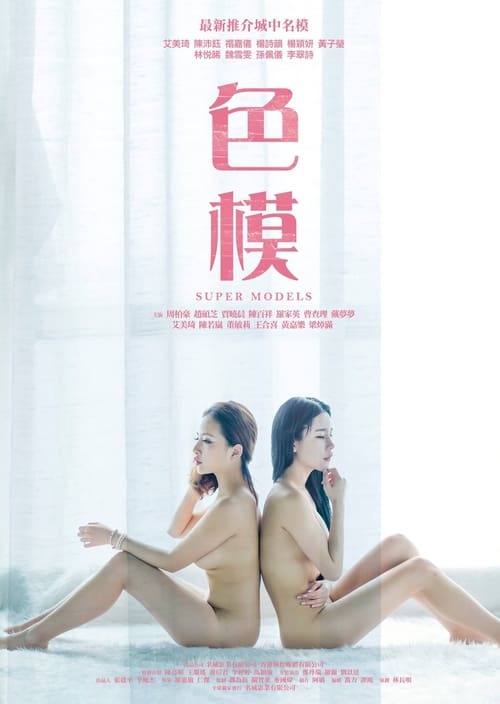
Super Models
Plot
How far would you go for fame and fortune? In Super Models, starring Wylie Chiu (Due West: Our Sex Journey), JJ Jia (La Lingerie), Pakho Chau (Love Detective), Law Ka Ying (Mr. & Mrs. Gambler) and Nat Chan (I Love Wing Chun), five young women find their own answers to this question. Jude, Sara, LuLu, Qoo and Suki are all trying to break into the modeling game, with Jude and Sara doing everything they can for a chance to meet modeling agency manager Charlie. LuLu, Qoo and Suki, on the other hand, have been recruited to undergo "star training." The girls all want to get to the same place, but their roads are as different as they are similar. Can any of them remain unscathed while making their way through this treacherous world?
Get the Weekly Woke Watchlist
New and trending movies scored for woke bias, preachy messaging, and forced political themes — before you waste your evening.
No spam. One useful email per week.
Overall Series Review
Categorical Breakdown
The film is a Hong Kong production with an all-Asian cast, so it does not engage with Western intersectional theory, the vilification of whiteness, or forced racial diversity. Character conflict revolves around personal ambition and the moral compromises required for career success, reflecting a universal meritocracy of fame, albeit a corrupt one.
The film critiques a specific, contemporary local social ill: the exploitative practices within the Hong Kong modeling industry. This critique targets a modern commercial system and its moral failures, not the foundation of East Asian civilization, its ancestors, or a general hatred of the 'home culture.'
Male characters like the agent Charlie are portrayed as predators who actively pimp out the women for sex, reinforcing the stereotype of the toxic male exploiter in a position of power. Women are depicted as ambitious to the point of being exploited or as 'girl bosses' managing their own agency, placing career and fame as the ultimate fulfillment over traditional family roles. The plot uses the women's exploitation as a key element of the story, giving it a high score, though the leads are not perfect 'Mary Sues' as they make compromises.
The core sexual dynamic of the film is the transactional exploitation of young female models by powerful men. The narrative centers on this traditional, albeit corrupted, male-female power structure. There is no focus on centering alternative sexualities, deconstructing the nuclear family, or lecturing on gender identity theory.
The pursuit of fame and fortune is the highest moral value in the film's world. The characters operate in a spiritual vacuum where success justifies any means, including sexual exploitation and moral degradation. The narrative is entirely driven by a subjective morality based on power dynamics and celebrity-driven idolatry, replacing any sense of objective, transcendent moral law.
Get the Weekly Woke Watchlist
New and trending movies scored for woke bias, preachy messaging, and forced political themes — before you waste your evening.
No spam. One useful email per week.