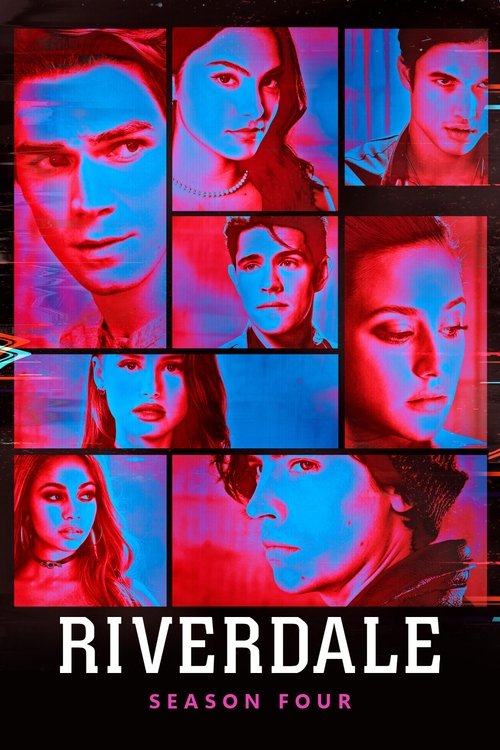
Riverdale
Season 4 Analysis
Season Overview
No specific overview for this season.
Season Review
Categorical Breakdown
The narrative pits the Core Four, which includes strong Latina and Black characters (Veronica, Toni, Munroe), against antagonists who are often depicted as privileged white elites and 'one-percenters' from institutions like Stonewall Prep. The plot extensively focuses on class-based villains, such as the 'blue bloods' who attempt to cover up a murder. Race is a secondary characteristic to class and power dynamics, but the highly capable characters of color consistently outsmart the often-bungling or toxic white male antagonists (except for Archie, who is portrayed as the selfless but simple-minded hero).
The town of Riverdale is the absolute source of constant murder, crime, cults, and corruption across the entire season's numerous subplots. The local institutions, including the high school, are repeatedly shown to be compromised, with the principal, Mr. Honey, being framed as an unfeeling tyrant the students must conspire to remove. The initial moment of honoring a positive male ancestor, Fred Andrews, is quickly overshadowed by the town's return to chaos, confirming the setting itself as fundamentally corrupt.
The female leads are consistently depicted as intellectually and strategically superior to the male characters. Betty is a prodigy in the Junior FBI program, using her intellect and 'dark side' to solve complex mysteries. Veronica is a hyper-competent entrepreneur and legal mind who constantly battles and outmaneuvers her criminal father. Cheryl Blossom is a 'badass' who operates flawlessly within her own sphere of influence. The women are the drivers of the complex plots, while the main male lead, Archie, is largely relegated to simple, physical 'saving the community' storylines.
The central lesbian couple, Cheryl and Toni, is a prominent fixture in the show. Their relationship is a key emotional and plot element of Cheryl's bizarre storyline, and it is entirely normalized within the town's social structure. Kevin Keller, a gay character, has a subplot centered on a sexual side hustle ('tickling for money') for financial gain, directly centering alternative sexual identity and a deviation from normative social structures.
The overarching moral framework is one of extreme moral relativism, where the main characters commit and cover up numerous crimes, including murder and grave desecration, to achieve their goals, which are framed as necessary for justice. The primary conflict exists outside of any transcendent moral law. While not explicitly Christian-bashing, the town's previous antagonists were a quasi-religious cult, and the season features a profane co-opting of a religious space (Cheryl keeping her dead brother's corpse in her family's chapel), highlighting a spiritual vacuum where the sacred is routinely debased.