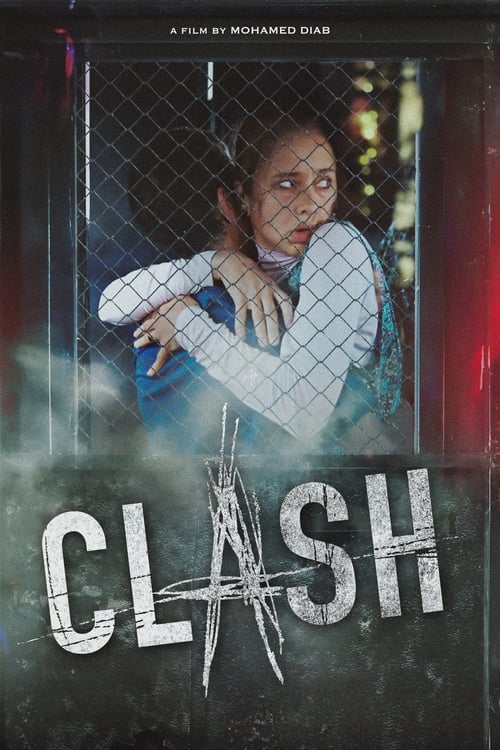
Clash
Plot
In 2013, in Cairo, a tragic fate brings together several detainees from different political and social backgrounds inside a police truck, during the turmoil that followed the ousting of president Morsi.
Get the Weekly Woke Watchlist
New and trending movies scored for woke bias, preachy messaging, and forced political themes — before you waste your evening.
No spam. One useful email per week.
Overall Series Review
Categorical Breakdown
The narrative begins with characters defined by their political and social identities: pro-Muslim Brotherhood, pro-Army, neutral journalists, and a family caught in the crossfire. The film’s core purpose is to demonstrate how shared suffering and humanity transcend these factional identities, pushing toward a universal recognition of merit and soul over political affiliation. The message is a critique of the polarization of identity, not a promotion of an intersectional hierarchy or the vilification of a single group.
The film does not express hostility toward Egyptian civilization itself, but rather presents a harsh critique of the political and security systems in a period of intense national chaos. The entire story is an internal conflict, and the director's stated goal is a plea for coexistence and an ‘idealistic approach’ for the Egyptian nation. It is a criticism of the breakdown of a system, not a declaration of civilizational self-hatred, and it does not depict external cultures as morally superior.
Female characters, such as the mother Nagwa and a veiled Muslim Brotherhood supporter, are depicted as ordinary citizens caught in the violence. Nagwa is shown protecting her family. The film focuses on the human element of survival and political division, not on feminist social critique. No characters exhibit “Girl Boss” traits, and the presence of a nuclear family caught in the chaos is central to the humanizing element.
The narrative is entirely focused on the political and sectarian conflict between the two main opposing factions in Egypt following the 2013 unrest. There are no elements related to alternative sexualities, queer theory, deconstructing the nuclear family, or gender ideology present in the story or themes.
The conflict is between a religiously-aligned political faction (Muslim Brotherhood) and a secular/military-aligned one. The film criticizes the fanaticism and polarization of both sides, but it does not frame traditional religion itself as the root of evil. A veiled character is presented sympathetically and has a positive human interaction, indicating that the critique targets political extremism, not faith, and advocates for a shared, transcendent human morality to overcome division.
Get the Weekly Woke Watchlist
New and trending movies scored for woke bias, preachy messaging, and forced political themes — before you waste your evening.
No spam. One useful email per week.