Siren
Season 2 Analysis
Season Overview
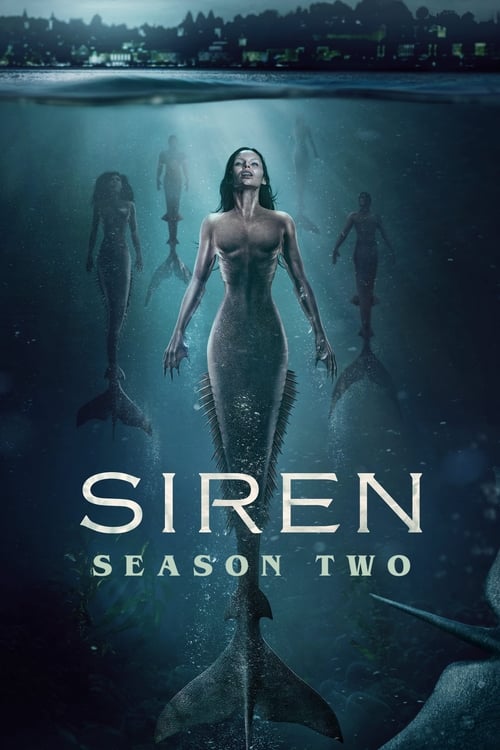
More mermaids appear in the coastal town of Bristol Cove … but are they seeking revenge or is something more catastrophic driving them out of the sea? Marine researchers Ben and Maddie continue to establish a bond with mermaid Ryn, not only to protect her, but to try to help save her entire civilization.
Season Review
Categorical Breakdown
The plot's central conflict revolves around the merfolk as a marginalized, victimized, and endangered species whose survival is threatened by the actions of human (Western/American) institutions like an oil company and the military. The narrative consistently champions the oppressed 'Other' (merfolk) as morally and ecologically superior to the destructive human aggressors, framing the conflict through a clear lens of systemic oppression and intersectional hierarchy.
The institutions of Western civilization are presented as the primary antagonists; an oil company is polluting the ocean with offshore drilling and sonar, and the military/government is exploiting merfolk DNA and declaring martial law to contain them. The local townspeople of Bristol Cove are shown to harbor fear and prejudice toward the merfolk and their human allies, branding a key hybrid character a traitor. The human world is depicted as fundamentally corrupt, exploitative, and the source of environmental destruction, contrasting unfavorably with the merfolk’s pure, ancient culture.
The main female mermaid, Ryn, is the alpha and leader of her pod, fighting to maintain her power against a female rival, demonstrating a clear matriarchal social structure. The male lead, Ben, is literally weakened and addicted to Ryn's siren song, requiring the female leads to save him, which serves to emasculate the central male character. The show actively contrasts the mermaid society, which purportedly does not acknowledge 'gender differences,' with human gender norms, effectively promoting a 'Girl Boss' model and questioning traditional male-female roles.
The season fully embraces and formalizes the polyamorous relationship (throuple) between the two female leads and the one male lead. Executive producers explicitly confirmed this central relationship is polyamorous. Mermaid culture is described as an 'advanced society' that does not see gender differences and is 'gender neutral and not binary,' actively injecting gender and sexual ideology into the core thematic elements of the narrative and deconstructing the traditional nuclear pairing.
There is no overt vilification of traditional religion, specifically Christianity. The season does, however, operate entirely within a secular and materialist-spiritual vacuum, replacing any transcendent moral law with the subjective moral code of the merfolk's pagan mythology and environmental ethics. The merfolk's ancient rituals and mythology are treated as the objective spiritual truth within the world, implying a rejection of Abrahamic morality in favor of moral relativism and the spiritual superiority of the 'Other.'