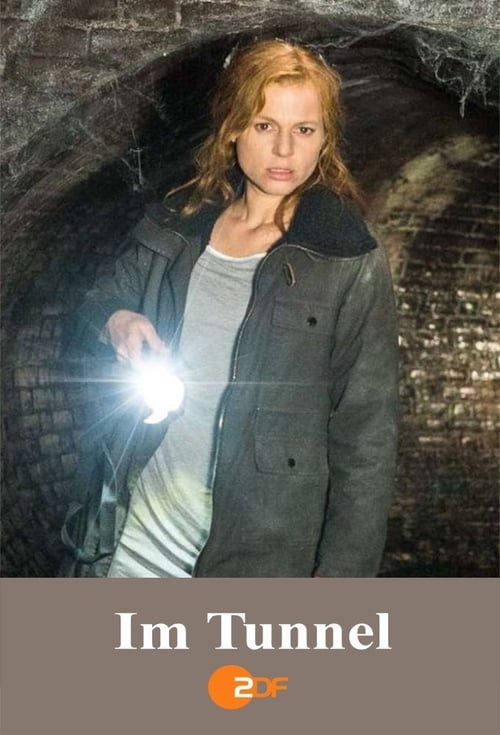
Im Tunnel
Plot
After Maren's brother is murdered, the young woman is completely shaken. Because the police only deal with the case in a routine manner and have no results to show for it, she sets about investigating the case herself. But in doing so, she realizes that she may be tangling with powerful people whose influence extends into her immediate surroundings. She believes that the nuclear waste mafia is behind her brother's death and that her own husband Mehdi is one of the criminals. Maren no longer knows who to trust. She feels like she is being watched every step of the way and even her best friend Iris doesn't believe a word she says. Little by little, Maren has to ask herself whether her family is in grave danger or whether she herself is the one in danger...
Get the Weekly Woke Watchlist
New and trending movies scored for woke bias, preachy messaging, and forced political themes — before you waste your evening.
No spam. One useful email per week.
Overall Series Review
Categorical Breakdown
The core conflict centers on corruption, crime, and personal paranoia, not on race or intersectional hierarchy. The protagonist, Maren, is pursuing a criminal network, and her husband, Mehdi, is a suspect. The mixed cultural background of the central couple is a non-factor in the conflict; the suspicion is based purely on his potential criminal ties. Characters are judged by their actions in the conspiracy, not immutable characteristics.
The narrative does not frame Western culture as fundamentally corrupt or evil. It focuses on criticizing institutional failure and specific criminal elements, namely an incompetent police force and a powerful nuclear waste mafia. The crime being a form of massive, profitable corruption reflects institutional distrust, but this is a critique of a system's failure to enforce laws, not a demonization of ancestors or core civilizational values.
The female protagonist, Maren, is centered as the only competent investigator, initiating a dangerous personal quest because the official, male-dominated police institution is portrayed as uninspired and routine. Her female intuition and obsession drive the plot forward against a corrupt and skeptical world. Her husband is the primary antagonist and suspected criminal, which places the male figure in a toxic and adversarial role to the active female lead. This leans into the 'Girl Boss' trope of the capable female succeeding where men and their institutions fail.
The plot focuses entirely on a criminal conspiracy, the resulting domestic psycho-thriller, and the breakdown of the traditional nuclear family due to crime and paranoia. There is no presence of alternative sexual ideologies, gender theory, or deconstruction of the nuclear family based on queer theory; its deconstruction is purely circumstantial due to the crime plot.
The narrative's focus on a modern, secular crime (nuclear waste mafia) and its psychological fallout leaves little room for spiritual or religious themes. The concept of morality is presented as a struggle between individual justice and criminal corruption. There is no depiction of traditional religion as a source of evil or Christian characters as villains.
Get the Weekly Woke Watchlist
New and trending movies scored for woke bias, preachy messaging, and forced political themes — before you waste your evening.
No spam. One useful email per week.