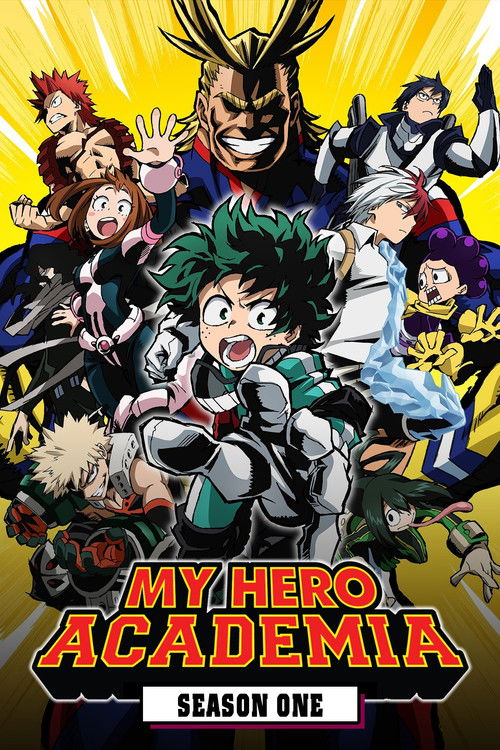
My Hero Academia
Season 1 Analysis
Season Overview
For his entire life, Izuku has dreamed of being a hero—an ambitious goal for anyone, but an especially challenging one for a boy without superpowers. That’s right: in a world where 80% of the population has some sort of special Gift, Izuku was unlucky enough to be born completely normal. But that won’t stop him from enrolling in one of the most prestigious hero academies in the world to learn what it truly means to be a hero.
Season Review
Categorical Breakdown
The narrative is centered on a Quirkless (superpowerless) protagonist who is marginalized by the world, yet is chosen by the greatest hero based on his intrinsic, selfless merit and hard work. The conflict is based on individual talent and determination, championing a universal meritocracy. The diverse cast is based on Quirks, not real-world immutable characteristics, and the few characters of non-Japanese background are not subjected to race-based commentary.
The series is set within a highly-structured Hero Society which is upheld as a necessary shield against chaos. The primary conflict of the season is the outright villain group attacking the prestigious UA High school, an anchor of the national establishment. The focus is on defending the home institution and the aspirational ideals of its culture rather than critiquing or hating it.
Female characters are clearly relegated to secondary and supporting roles, and the class itself has a disproportionate number of male students. The character Mineta frequently engages in explicit, unpunished sexual perversion and harassment of female classmates, which is a common but regressive shonen trope. This is not 'Girl Boss' feminism, but a traditional shonen structure that sidelines female agency.
There is no overt presence of LGBTQ+ themes, characters, or ideology in Season 1. The focus is exclusively on the traditional heterosexual subtext between the main male and female leads. Gender ideology or a critique of the nuclear family is entirely absent.
The core morality is based on objective, transcendent concepts of justice, self-sacrifice, and heroism, which are explicitly rewarded in the plot. The main protagonist embodies selflessness, saving another person even when powerless and told not to. There is no explicit reference to or hostility toward traditional religion.