My Hero Academia
Season 2 Analysis
Season Overview
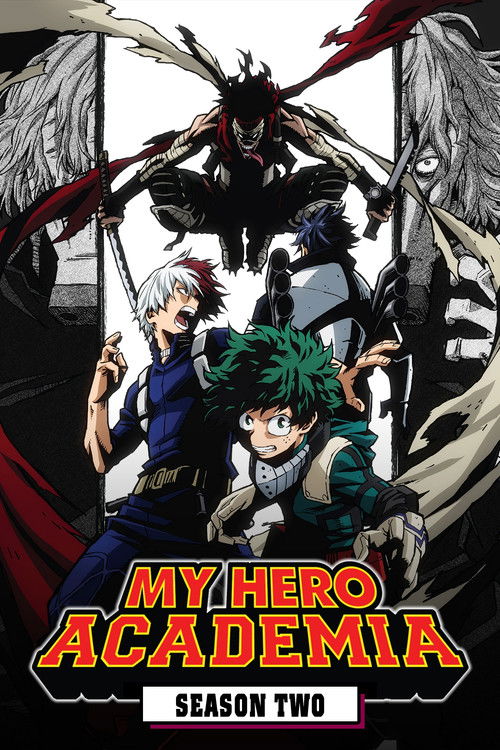
U.A. High School's most prestigious event begins: the Sports Festival, an opportunity for aspiring heroes to showcase their skills to both the public and potential recruiters. However, the path to glory is never easy, especially for Izuku Midoriya, who must now face off against his talented classmates to prove his worth to the world.
Season Review
Categorical Breakdown
Characters are universally judged by their Quirks (abilities) and how hard they train to master them. The U.A. Sports Festival is a high-stakes, purely meritocratic competition designed to measure power and skill, not privilege or immutable characteristics. The narrative is focused on individual striving, exemplified by Izuku Midoriya’s struggle to control his inherited power, rather than a lecture on systemic oppression.
The central conflict involving the Hero Killer Stain critiques the modern hero society for becoming too commercial and profit-driven, but his goal is a revival of ‘true’ selfless heroism, which is a call to uphold the civilization's moral ancestors and ideals. The protagonists work within the system to perfect it, viewing the institutions (UA, Pro-Heroes) as the necessary defense against chaos.
Male and female characters train and compete side-by-side in the meritocratic Sports Festival. Female characters like Uraraka and Yaoyorozu are shown as dedicated, flawed, and developing heroes who must earn their strength, avoiding the 'Mary Sue' trope. The plot focuses on their personal growth and training to improve their individual Quirks. The core relationship dynamics are traditional and do not feature overt anti-family or anti-natal messaging.
The narrative makes no attempt to center or lecture on alternative sexualities or gender ideology. All interpersonal relationships and family structures presented are traditional and normative. Sexuality is treated as a private matter that is not the defining trait of any character or plotline in the season.
The show is devoid of anti-religious content. The moral framework is secular, based on an objective, transcendent ideal of heroism (the 'Symbol of Peace'). The Hero Killer Stain acts as a moral arbiter who believes in an objective 'higher moral law' of what a true hero should be, which directly opposes moral relativism.