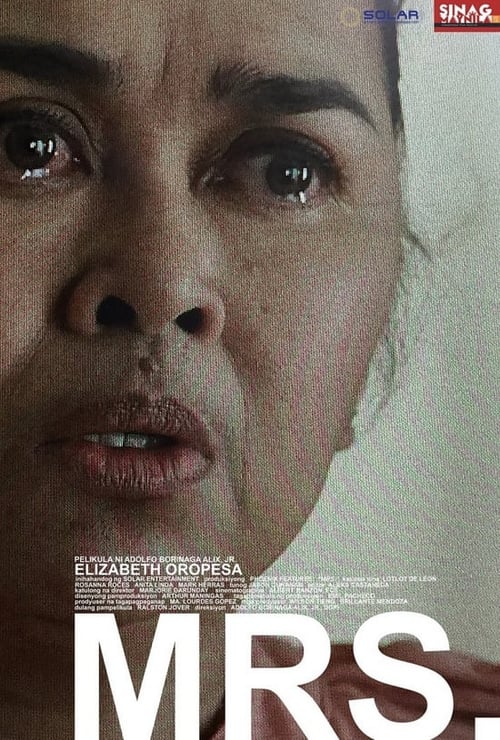
Mrs.
Plot
70-year-old Virginia shares the old ancestral house with Delia, her ever-loyal maid. Delia is marrying her long-time boyfriend, Rene, and tearfully confides to Virginia that she wants to go home to her parents in the province to start a new family life with him. Haunted by a past that Virginia tries to conquer her only son Sonny Boy who disappeared years ago, what follows shows a portrait of a woman and a mother trying to juggle the sad realities of life in a cycle of life and death.
Get the Weekly Woke Watchlist
New and trending movies scored for woke bias, preachy messaging, and forced political themes — before you waste your evening.
No spam. One useful email per week.
Overall Series Review
Categorical Breakdown
The movie is a non-Western film focusing on Filipino characters and their class and political struggles. The narrative does not utilize an intersectional lens of race and privilege in a Western sense, nor does it vilify 'whiteness' or feature forced diversity. Characters are judged based on their actions within their cultural context.
The central protagonist, Virginia, is defined by her stubborn refusal to leave her ancestral home, which is literally falling apart, as she clings to the hope of her son's return. The house and family lineage are treated as sacred and worth protecting, which directly contradicts civilizational self-hatred. The critique is leveled against systemic political oppression within the nation, not the culture itself.
Gender dynamics in the film are heavily skewed toward a 'women run the world' theme where male characters are consistently depicted as either absent, abducted, or 'deemed good for nothing.' One daughter belongs to a 'cult that espouses a strange sort of feminist energy in the absence of a dominant male.' The maid's personal crisis centers on her decision regarding a pregnancy after being abandoned by her married, deceitful boyfriend, which introduces an element of anti-natal messaging.
The plot focuses entirely on the heterosexual-centric issues of motherhood, marriage betrayal, and a son's political disappearance. No search results or plot summaries indicate the centering of alternative sexualities, queer theory, or gender ideology. This theme is absent from the narrative.
Virginia is described in a review as a 'simple, trusting woman of faith' who relies on that faith to conquer her past. Religion is a source of quiet strength for the protagonist and is treated with respect, not hostility. The film embraces Objective Truth in terms of moral consequences for character actions.
Get the Weekly Woke Watchlist
New and trending movies scored for woke bias, preachy messaging, and forced political themes — before you waste your evening.
No spam. One useful email per week.