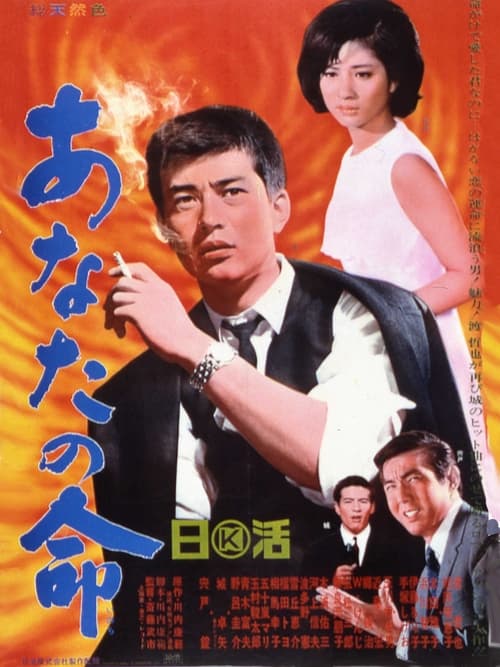
Your Life
Plot
A moodo/akushon yakuza picture with heavy emphasis on poignant seishun romance.
Get the Weekly Woke Watchlist
New and trending movies scored for woke bias, preachy messaging, and forced political themes — before you waste your evening.
No spam. One useful email per week.
Overall Series Review
Categorical Breakdown
The narrative is centered on a classic yakuza conflict, which judges characters strictly by their adherence to the established moral code of 'giri' (duty) and 'ninjo' (humanity) rather than race or immutable characteristics. All central characters are Japanese, and the plot contains no vilification of 'whiteness' or forced diversity. The emphasis remains on personal honor and loyalty to the group.
As a Japanese yakuza film from the 1960s, the setting and cultural framework are intrinsically Japanese, valuing the distinct traditions and codes of honor, family, and organization. The plot does not contain hostility toward its own civilization; instead, the yakuza code, despite its criminal element, often functions as a distorted but recognizable version of traditional Japanese social order, focused on hierarchy and sacrifice.
The 'seishun romance' emphasizes a traditional gender dynamic where the hero is defined by his willingness to sacrifice his own life or happiness for his duty or for the woman he loves. Women in this genre, while often strong emotional anchors, primarily serve as the object of the hero’s emotional conflict (ninjo). The focus is on the protective masculinity of the hero and the pathos of the heroine, not a 'Girl Boss' or anti-natalist message.
The core plot is explicitly defined by a 'poignant seishun romance,' meaning a male-female pairing is central to the emotional dynamic. The film adheres to a normative structure, centered on traditional male-female relationships, and provides no platform for alternative sexual ideology, deconstruction of the nuclear family, or modern gender theory.
While a yakuza film's morality is often rooted in secular honor codes rather than explicit religious doctrine, the moral universe is not subjective 'power dynamics' but rather a fixed, objective code of loyalty and duty (giri). The narrative's somber, fatalistic mood often contains an acknowledgement of transcendent forces like fate or karma, which serve a higher moral law, not an active hostility toward faith.
Get the Weekly Woke Watchlist
New and trending movies scored for woke bias, preachy messaging, and forced political themes — before you waste your evening.
No spam. One useful email per week.