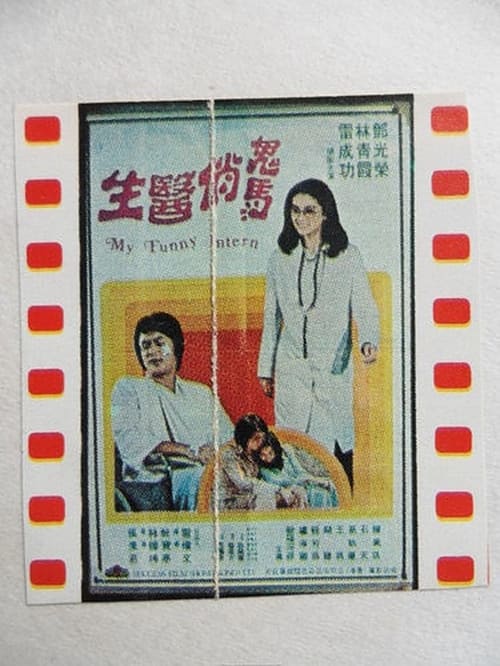
My Funny Intern
Plot
Alan Tang plays a famous soccer coach who comes down with the flu. He goes to a clinic for help and meets Brigitte Lin who is a doctor. He is immediately taken with her and asks her out. She rebuffs his advances and refuses to attend his 25th birthday party. When Tang is sad at his party, his friends get the idea to fake a call to Doctor Fong (Lin). She comes and, although annoyed by the trick, stays. Lin and Tang then fall in love...
Get the Weekly Woke Watchlist
New and trending movies scored for woke bias, preachy messaging, and forced political themes — before you waste your evening.
No spam. One useful email per week.
Overall Series Review
Categorical Breakdown
Characters are judged by their professional merit (coach, doctor) and romantic suitability. As an East Asian production from 1976, the casting is culturally and historically authentic. The plot does not rely on race, immutable characteristics, or intersectional hierarchy for its conflict, nor does it contain any vilification of ‘whiteness’ or forced diversity.
The film is a lighthearted romantic comedy set entirely within its native Taiwanese culture. The narrative shows no evidence of civilizational self-hatred, demonization of ancestors, or framing the home culture as fundamentally corrupt. It utilizes its cultural setting for a universal love story without deconstruction.
Dr. Fong is a successful, highly respected medical doctor, indicating a celebration of female professional competence and independence. However, the entire plot is dedicated to the male lead's effort to court and win her love, culminating in a traditional romantic pairing, which counters extreme anti-natal or anti-male messaging. The male lead is a comedic protagonist and initially a 'playboy' but changes for her, not an emasculated buffoon.
The story is a straightforward heterosexual romantic comedy. The plot centers exclusively on the developing male-female romantic pairing and contains no themes of centering alternative sexualities, deconstructing the nuclear family, or promoting gender ideology. The structure is entirely normative for its time and genre.
The movie is a romantic comedy focused on interpersonal relationships and misunderstandings. The narrative does not engage with religion or spirituality. It operates on an implied set of objective virtues like honesty and commitment necessary for true love, without promoting moral relativism or hostility toward any traditional religion.
Get the Weekly Woke Watchlist
New and trending movies scored for woke bias, preachy messaging, and forced political themes — before you waste your evening.
No spam. One useful email per week.