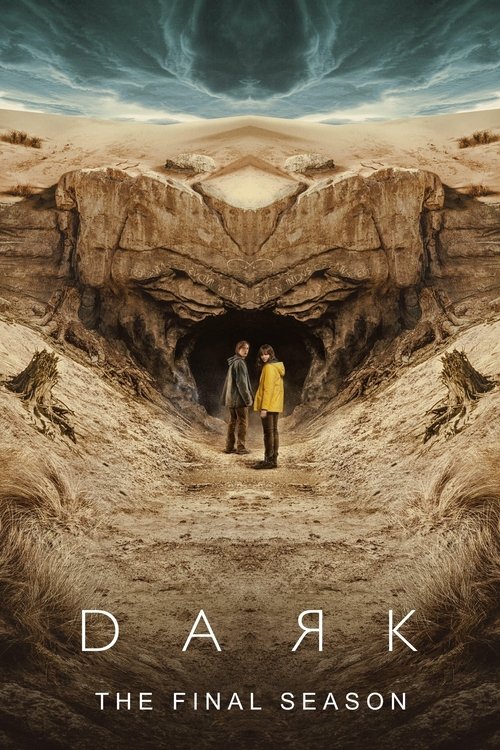
Dark
Season 3 Analysis
Season Overview
The time-twisting madness reaches its conclusion in a strange new world, where some things are quite familiar — and others are disturbingly not.
Season Review
Categorical Breakdown
The narrative is centered entirely on a time loop and the convoluted family connections within a small, fictional German town. Characters are defined by their position in the paradox (son, mother, traveler, knot-maker), not by race or class privilege. The casting is consistent with the German setting, showing universal human flaws and virtues across the entire cast.
The corruption and suffering within the town of Winden are shown to be the result of a local scientific disaster and the personal, repeated sins of a few interwoven families. The show does not extend this specific local failure into a condemnation of broad Western culture, heritage, or national identity. The core conflict is about the internal human struggle between love and letting go.
The primary figures driving the conflict and seeking the solution are both male and female, with Eva (old Martha) leading the force attempting to maintain the loop and Claudia leading the effort to break it. While female figures are immensely powerful, the entire plot hinges on the existence and protection of a child (Eva's son), making motherhood a critical, central, and tragic motivation, not a devalued "prison."
The complex family knot and central paradox of the series are created almost entirely through heterosexual pairings and their resulting children across time. The focus is on the sci-fi deconstruction of the traditional male-female family unit through time travel/incestuous loops, not through an ideological promotion of alternative sexualities or gender theory as a primary narrative theme.
The show employs heavy biblical and mythological terminology (Adam, Eva, *Sic Mundus*) to frame its philosophical sci-fi conflict over fate and free will. These religious symbols are used metaphorically for characters playing "God," but the show does not actively vilify religion, Christianity, or people of faith. The ending relies on a selfless, objective act of sacrifice to restore balance.