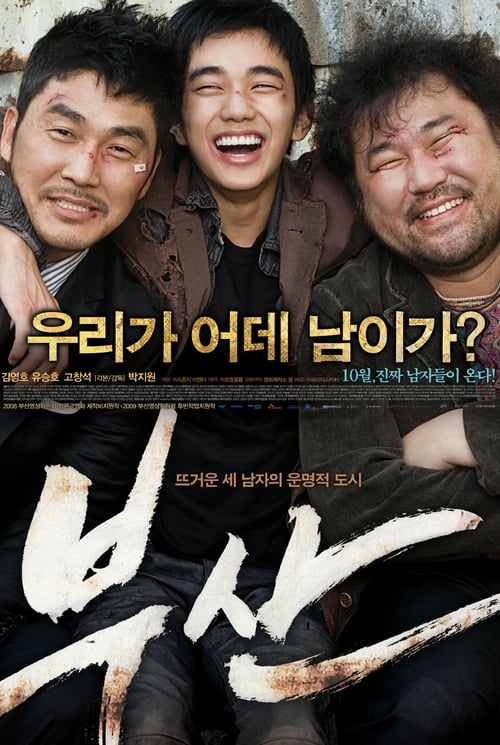
City Of Fathers
Plot
Kang-soo is a third-rate street thug in Busan; he's an alcoholic and gambling addict who's always on the run from loan sharks. But when his rebellious teenage son Jong-chul is diagnosed with kidney cancer, he tries to be a real parent for the first time and seeks out Jong-chul's biological father, Tae-suk, a pimp. Tae-suk, however, refuses to help.
Get the Weekly Woke Watchlist
New and trending movies scored for woke bias, preachy messaging, and forced political themes — before you waste your evening.
No spam. One useful email per week.
Overall Series Review
Categorical Breakdown
The movie is a South Korean production focusing entirely on Korean characters. The conflict is based on character choices, such as gambling and pimping, and the pursuit of money for a life-saving operation. The central issue is the failure of individual men as fathers, not an intersectional critique of race or privilege. All characters are judged solely by their merit and actions.
The film does not target 'Western civilization' or the core institutions of its home culture, South Korea, for fundamental corruption. The critique is leveled specifically at the criminal underground, the violence of gang life, and the moral vacuum of irresponsible individuals. The plot focuses on a dysfunctional family unit, which is an internal drama, not a civilizational indictment.
The main plot is an intense drama of fathers and sons. Male characters are depicted as deeply flawed—one is an abusive alcoholic gambler, the other a gangster and pimp—but this serves the theme of desperate redemption and sacrifice, not the emasculation of men to elevate female characters. Women are secondary or marginalized in the story, and there is no notable 'Girl Boss' or overt anti-natalist messaging. The central action is an attempt to save a child's life.
The narrative is completely focused on the heterosexual dynamic of fatherhood (biological versus non-biological). The story contains no elements of alternative sexual ideology, queer theory, or messaging that deconstructs the nuclear family beyond the factual breakdown of the protagonist's personal relationships.
The movie is a secular crime drama. The plot summaries and available commentary do not mention religious themes, a spiritual vacuum, or hostility toward any traditional religion. The morality presented is a matter of personal debt, sacrifice, and the immediate consequence of criminal violence.
Get the Weekly Woke Watchlist
New and trending movies scored for woke bias, preachy messaging, and forced political themes — before you waste your evening.
No spam. One useful email per week.