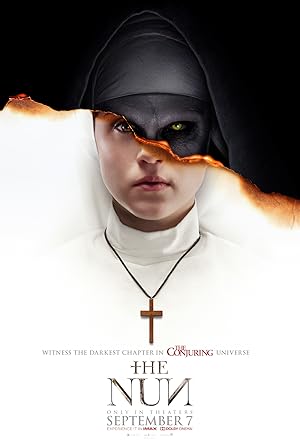
The Nun
Plot
When a young nun at a cloistered abbey in Romania takes her own life, a priest with a haunted past and a novitiate on the threshold of her final vows are sent by the Vatican to investigate. Together they uncover the order's unholy secret. Risking not only their lives but their faith and their very souls, they confront a malevolent force in the form of the same demonic nun that first terrorized audiences in 'The Conjuring 2,' as the abbey becomes a horrific battleground between the living and the damned.
Get the Weekly Woke Watchlist
New and trending movies scored for woke bias, preachy messaging, and forced political themes — before you waste your evening.
No spam. One useful email per week.
Overall Series Review
Categorical Breakdown
The casting includes a non-white actor (Demián Bichir) as the Vatican priest, Father Burke, but his character is defined by his personal, spiritual history and vocation, not his race or any discussion of an intersectional lens. There is no vilification of 'whiteness' or forced political lecturing on race or privilege. Character merit, particularly in terms of faith and courage, drives the plot.
The Catholic Church and the Vatican institution are viewed as the necessary force of order that sends agents to combat chaos. The setting of the remote Romanian abbey and its dark history is rooted in a specific European context (a Duke summoning a demon). The ultimate defense against the demon is a Christian relic—the Blood of Christ. Institutions of Western civilization, specifically the Church, are depicted as a shield against spiritual anarchy, not as fundamentally corrupt or racist.
Sister Irene, the novitiate, is the ultimately decisive character in defeating the demon, displaying exceptional spiritual strength and courage that surpasses the male priest, Father Burke. Father Burke is depicted as struggling with a past spiritual failure and is incapacitated at key moments. This highlights the female lead's central heroism, but the context is her religious calling, not an anti-natalist or 'career is fulfillment' lecture. She is a woman of faith whose strength complements the priest's mission.
The narrative centers entirely on a supernatural horror plot involving Catholic figures, demonic possession, and spiritual warfare. Sexual ideology, alternative sexualities, and gender theory are completely absent from the film's themes and dialogue. The structure is normative, focusing on the traditional spiritual roles of a priest and a nun in a battle against evil.
The core premise validates the existence of God, the Devil (Valak), and a transcendent moral order. Christian faith, prayer, and sacramentals (like the cross, holy water, and the Blood of Christ) are the literal and only weapons that have power over the evil entity. The film does not frame traditional religion as the root of evil; instead, faith is the ultimate source of strength and salvation.
Get the Weekly Woke Watchlist
New and trending movies scored for woke bias, preachy messaging, and forced political themes — before you waste your evening.
No spam. One useful email per week.