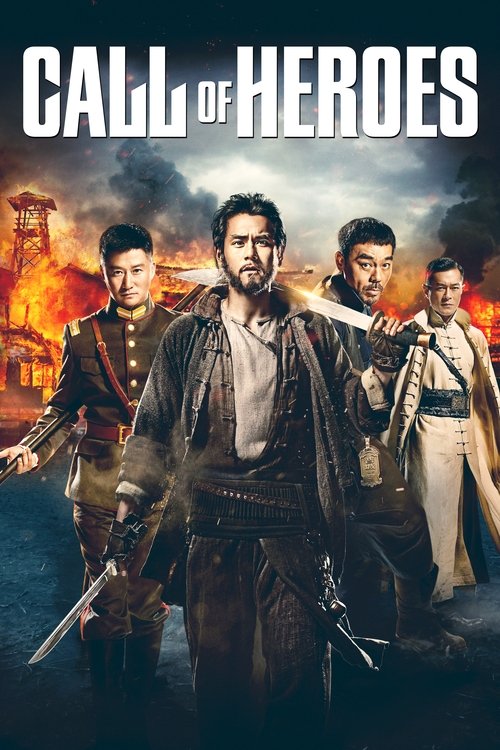
Call of Heroes
Plot
During the warlords era in China, a village located in rural area called Pucheng fell into dangerous situation when its government allocated all its military force to the front line, the cruel commandant Cao from the enemy troops arrived the village and killed the innocent, the guardians of Pucheng were desperate to fight against Cao for justice and to protect their homeland.
Get the Weekly Woke Watchlist
New and trending movies scored for woke bias, preachy messaging, and forced political themes — before you waste your evening.
No spam. One useful email per week.
Overall Series Review
Categorical Breakdown
The film is a Hong Kong-Chinese production set in 1914 China with an ethnically and historically authentic cast. The narrative is exclusively focused on the moral and political conflict between a righteous sheriff and a tyrannical warlord, making the core theme universal justice over systemic oppression or identity groups.
The plot's entire purpose is the defense of a community and homeland (Pucheng) against internal corruption and external tyranny (warlord Cao). The core struggle is to preserve local law, order, and civilization against chaotic forces, which aligns with the defense of a core social structure.
The main heroic and villainous roles are men, consistent with the martial arts genre. Female characters, such as the sheriff's wife and a teacher, are in supportive roles, though the wife is noted to be 'unexpectedly formidable.' The narrative does not contain any 'Girl Boss' tropes, anti-natalism, or significant emasculation of the male heroes, who are defined by their protective and honorable masculinity.
The plot is entirely focused on a life-or-death moral and physical conflict during a period of civil strife. There is no element of alternative sexualities, deconstruction of the nuclear family, or gender ideology present in the narrative or character development.
The core dilemma—upholding law and justice at the risk of annihilation—establishes a commitment to an objective moral law over subjective pragmatism or 'power dynamics.' The villain is pure evil, killing for pleasure, which reinforces a clear distinction between good and evil rather than moral relativism.
Get the Weekly Woke Watchlist
New and trending movies scored for woke bias, preachy messaging, and forced political themes — before you waste your evening.
No spam. One useful email per week.