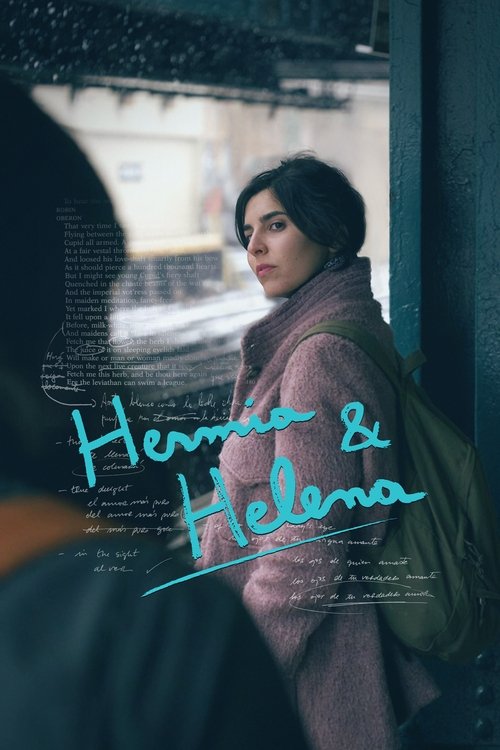
Hermia & Helena
Plot
Camila, a young Argentine theater director, travels from Buenos Aires to New York to attend an artistic residency to develop a Spanish translation of Shakespeare's "A Midsummer Night's Dream." Upon her arrival, she begins to receive a series of mysterious postcards which set her down a winding path through her past and towards her future.
Get the Weekly Woke Watchlist
New and trending movies scored for woke bias, preachy messaging, and forced political themes — before you waste your evening.
No spam. One useful email per week.
Overall Series Review
Categorical Breakdown
The plot centers on a character's search for personal identity and a father she never knew, not an interrogation of immutable characteristics or an intersectional hierarchy. The casting is multi-ethnic, but the story's conflict is driven by artistic ambition and romantic confusion, not by 'whiteness' or systemic oppression. The Argentine-in-New York dynamic is explored as cultural displacement, not as a lecture on racial injustice or privilege.
The movie is a contemporary take on a classic Western text (Shakespeare) and is described as a 'love letter' to the director's adopted city of New York. The culture, institutions (like the artistic residency), and ancestors are not demonized. The general tone is an appreciation of the city's artistic and bohemian life, indicating gratitude rather than hostility toward the West.
The protagonist is a 'Girl Boss' type—a young female director on an artistic fellowship whose primary pursuit is her career and personal exploration. She is depicted as 'capriciously' entering into multiple relationships while leaving a boyfriend behind, reflecting an anti-traditional, highly individualistic, and non-complementarian view of gender roles and fidelity. However, no direct condemnation of motherhood or depiction of men as bumbling idiots is evident in the main plot points.
The narrative focuses on the protagonist's multiple heterosexual romantic relationships and the general theme of 'coupling and uncoupling.' There are mentions of 'sexual dualities' in reviews, but no substantial evidence suggests the story centers on alternative sexualities, deconstructs the nuclear family as an institution, or promotes gender ideology. The focus remains on personal, fluid, romantic affections.
The film’s themes are entirely secular, focusing on art, literature, and chaotic human relationships. There is no commentary, explicit or implicit, on organized religion, Christianity, or faith. The morality is subjective in the sense of the protagonist's fluid emotional commitments, but this functions as a dramatic convention based on the source material's themes, not an anti-theistic moral lecture.
Get the Weekly Woke Watchlist
New and trending movies scored for woke bias, preachy messaging, and forced political themes — before you waste your evening.
No spam. One useful email per week.