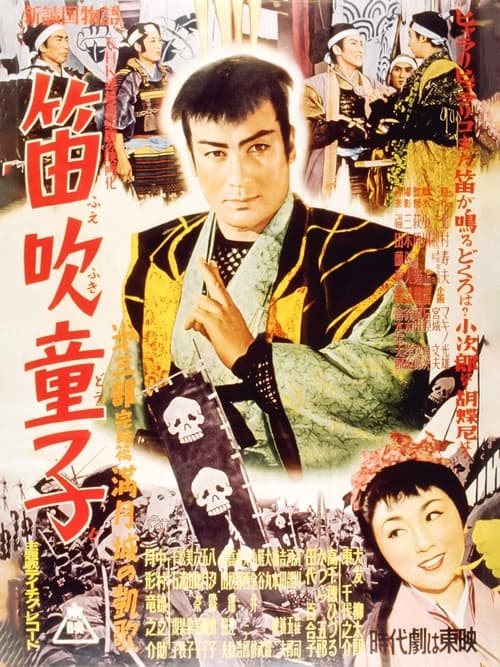
Clan Revival
Plot
After the Onin War ended in 1477, Kyoto was left in ashes and the nation was in complete disorder. Bands of roving samurai called the "nobushi" terrorized the country under the leadership of Akagaki Genba and overthrew Mangetsu Castle in Tanba Province scattering the few survivors. Lord Niwa's two sons have been studying in China and return to Japan upon hearing of the tragedy in an attempt to restore the clan. On Mt. Oe they meet magician Kiri no Kojiro and try to enlist his aid. With touches of the supernatural and rousing sword-play can they succeed against the evil villains whose symbol is the skull mask?
Get the Weekly Woke Watchlist
New and trending movies scored for woke bias, preachy messaging, and forced political themes — before you waste your evening.
No spam. One useful email per week.
Overall Series Review
Categorical Breakdown
The plot's central conflict is a struggle between legitimate clan heirs and destructive marauders who represent evil. Merit is judged by one's commitment to the clan and the pursuit of justice for the murdered father. Casting is historically and racially authentic for a 1954 Japanese film. The entire premise rests on the importance of lineage and duty, directly opposing a narrative focused on intersectional grievance or vilification of a specific ethnic group.
The entire story is a heroic effort to revive a destroyed clan, reclaim the ancestral castle, and restore order to the home province. This narrative is a celebration of civilizational and familial heritage, viewing the family, clan, and their castle as a necessary shield against the chaos of the Nobushi. The villain is the destroyer of the home, not the home itself.
The core protagonists driving the action are the two male sons. The plot centers on restoring a male-led feudal structure (the Lord’s clan), placing a protective, masculine duty at the center of the story. While female characters exist in the genre, the main focus is on male-driven action and responsibility. The narrative structure is one of traditional complementary roles, not one that celebrates the 'Girl Boss' trope or contains anti-natalist messaging.
The genre and 1954 era of the film dictate a normative structure centered on male-female pairing and the traditional nuclear/extended family, which the heroes are fighting to restore. Sexual identity is not a plot point, and the film does not engage with or lecture on any modern sexual or gender theory. Sexuality remains a private matter secondary to the public drama of the clan revival.
The heroes enlist the aid of a 'magician' or 'wizard' on Mt. Oe, Kiri no Kojiro, with touches of the supernatural aiding the righteous cause. This use of the spiritual realm as a source of power and assistance against the clear 'evil villains' suggests an acknowledgment of a transcendent good and a higher moral law. The conflict is a moral one between good and evil, not a critique of religion.
Get the Weekly Woke Watchlist
New and trending movies scored for woke bias, preachy messaging, and forced political themes — before you waste your evening.
No spam. One useful email per week.