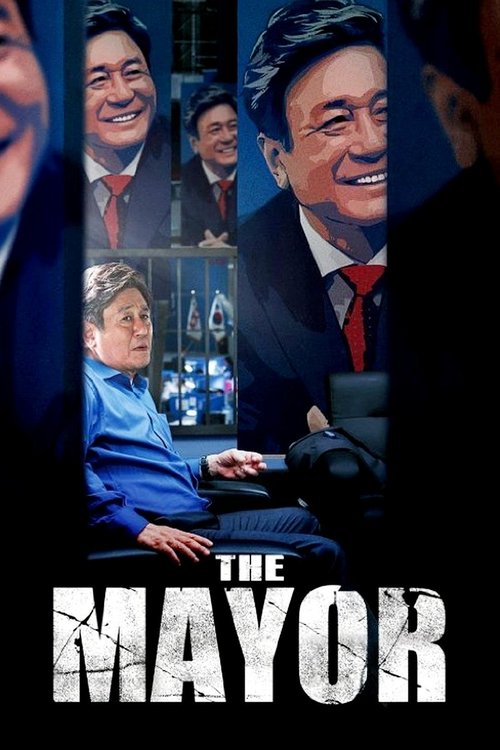
The Mayor
Plot
For the first time in Korean history, the mayor of Seoul attempts a third term in office, with his entire campaign team ready to soil their hands.
Get the Weekly Woke Watchlist
New and trending movies scored for woke bias, preachy messaging, and forced political themes — before you waste your evening.
No spam. One useful email per week.
Overall Series Review
Categorical Breakdown
The narrative focuses on universal human flaws like ambition and corruption in politics, judging characters by their amoral pursuit of power rather than immutable characteristics. Race-based conflict or lectures on privilege are absent, as the setting is culturally homogeneous. Casting is simply colorblind and appropriate to the South Korean setting.
The film heavily critiques the political system and the money-first policies of the home nation, framing its institutions (the government/electoral process) as deeply corrupt and cynical. This hostility is targeted at the political class and its modern practices, not at the entire Korean heritage or civilization, and it does not use a 'Noble Savage' trope or advocate for foreign cultural superiority.
Female characters hold significant positions of power and influence, including the Mayor's main political rival and an ambitious young operative who becomes entangled in the corruption. The women are depicted as distinct but equally susceptible to the corrosive effects of ambition as the male characters. The narrative features career-driven women in a power struggle but contains no anti-natalist messaging or 'Mary Sue' perfection, nor does it explicitly emasculate men for thematic reasons, though the central male lead is a thoroughly toxic figure.
Alternative sexualities, gender ideology, and the deconstruction of the nuclear family are not part of the film's political thriller plot. The themes are entirely focused on corruption and the struggle for political office, leaving this category's concerns entirely unaddressed.
The political world depicted operates on pure amorality, suggesting a spiritual vacuum where morality is entirely subjective and driven by power dynamics. While there is no explicit sermonizing against organized religion like Christianity, the complete absence of a transcendent moral law in the high-stakes political environment places the film in the realm of moral relativism in practice.
Get the Weekly Woke Watchlist
New and trending movies scored for woke bias, preachy messaging, and forced political themes — before you waste your evening.
No spam. One useful email per week.