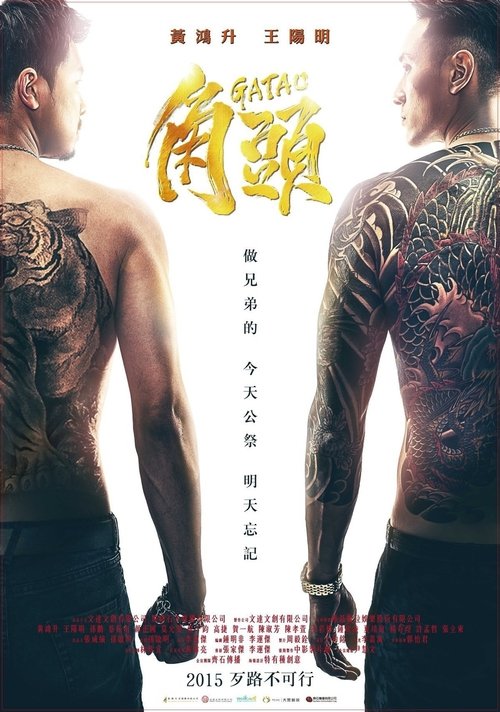
Gatao
Plot
Qing Feng is the top lieutenant under gang boss Yong. Three years ago, his good friend Xiong went to jail for him in the name of brotherhood. Upon his return, Xiong is immediately favored by Yong, which plants a growing rift in his friendship with Qing Feng. Over on the rival gang side, U.S.-educated Michael returns to Taiwan to take over for his late father and applies ruthless business strategies to expand his turf. With his eyes set on a profitable property development project, Michael will stop at nothing to eliminate Yong and take over his turf.
Get the Weekly Woke Watchlist
New and trending movies scored for woke bias, preachy messaging, and forced political themes — before you waste your evening.
No spam. One useful email per week.
Overall Series Review
Categorical Breakdown
The film is set entirely within a Taiwanese context with no commentary on race or 'whiteness,' nor any evidence of forced diversity or historical race-swapping. The conflict is based purely on the merits of the characters' actions (loyalty, ambition, greed) and their adherence to a local cultural code of conduct. All casting is regionally authentic.
The central conflict involves the heroic character, Xiong, defending a traditional local market and 'traditional values' against the US-educated, money-driven antagonist, Michael, who is characterized by his 'runaway capitalism' and desire for urban renewal. The narrative shows gratitude toward and a defense of the local culture and ancestral space against modern commercialism, which is the opposite of civilizational self-hatred.
The core of the plot is driven by male characters, their brotherhood, rivalry, and struggle for power, which centers the masculine experience. The main female role is a romantic interest, Lei Lei, and the dynamics appear to be traditional. The narrative structure does not promote the 'Girl Boss' trope, anti-natalism, or the emasculation of men. However, the film's R-rated tags include 'Rape, Sexual Assault, Sexual Violence,' which reflects a dark, exploitative element of the criminal underworld but not a progressive feminist messaging agenda.
The narrative follows a completely normative structure with a traditional male-female romantic relationship between the protagonist Xiong and Lei Lei. The film focuses on themes of gang conflict, loyalty, and familial ties. There is no presence of alternative sexual ideologies, centering of LGBTQ+ characters, or critique of the nuclear family structure.
The thematic focus is on morality within a criminal context, exploring loyalty, redemption, and personal ethical codes. The story does not contain any critique or hostility toward traditional religion, Christianity, or faith. Moral choices are presented as weighty and consequential, suggesting a belief in objective moral law within the context of the gang's honor code.
Get the Weekly Woke Watchlist
New and trending movies scored for woke bias, preachy messaging, and forced political themes — before you waste your evening.
No spam. One useful email per week.