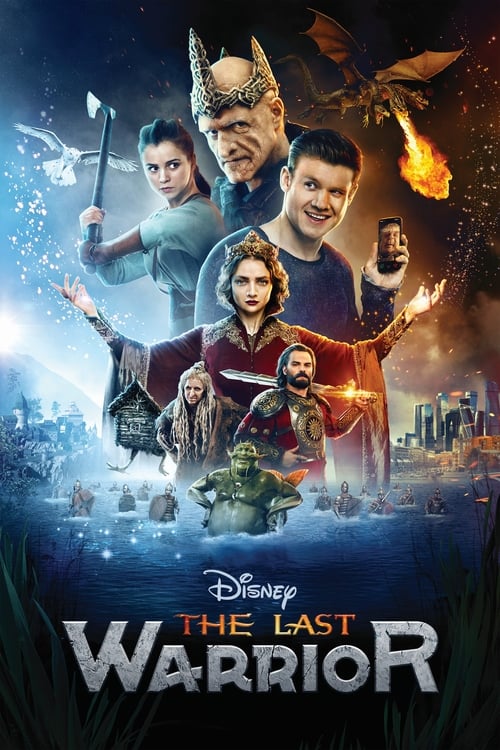
The Last Warrior
Plot
Ivan is an ordinary guy who is transferred from modern Moscow to the fantasy world Belogorye. In this parallel universe where characters of Russian fairy tales live, magic is an integral part of daily life, and arguments are settled with the help of sword . Unexpectedly, Ivan finds himself in the middle of a battle between good and evil, and he must discover why everyone thinks that he must play the main role in upcoming events...
Get the Weekly Woke Watchlist
New and trending movies scored for woke bias, preachy messaging, and forced political themes — before you waste your evening.
No spam. One useful email per week.
Overall Series Review
Categorical Breakdown
The entire cast and setting are drawn from Russian and Slavic folklore, resulting in an ethnically authentic representation for the story's source material. The central conflict is a personal one, where the hero must acquire merit by transforming from a selfish fraud into a Bogatyr. The narrative does not utilize race or intersectional hierarchy as a lens for the characters' value.
The film contrasts the cynical, materialist culture of modern Moscow (represented by the hero's initial life) with the pure, magical world of Belogorye, which is based on traditional Russian heritage. The hero's goal is to save this ancestral, traditional world. Institutions and figures of Russian folklore, such as the Bogatyrs, are respected and restored as shields against chaos, showing gratitude for the culture.
Gender dynamics lean heavily on the 'Girl Boss' trope. The secondary female protagonist, Vasilisa, is an accomplished warrior who initially holds the male lead in contempt for his incompetence and lack of courage. The primary antagonist, Galina/Varvara, is an extremely powerful female strategist and fighter who personally defeats legendary male heroes. The male lead begins as a bumbling idiot, making his journey one of catching up to the competence already possessed by the main female characters.
The narrative follows a normative structure that centers the romantic connection between the male protagonist and the female warrior Vasilisa. The focus is entirely on a traditional hero's adventure and a familial relationship (Ivan's mother being the villain). No sexual ideology, alternative sexualities, or lecturing on gender theory is present in the plot.
The spiritual landscape is based on pre-Christian Slavic mythology and magic, not on any Abrahamic faith. The moral framework is clearly transcendent, focusing on an objective battle between light and darkness (good and evil). There is no vilification of traditional religion; instead, faith in one's magical heritage is a source of strength.
Get the Weekly Woke Watchlist
New and trending movies scored for woke bias, preachy messaging, and forced political themes — before you waste your evening.
No spam. One useful email per week.