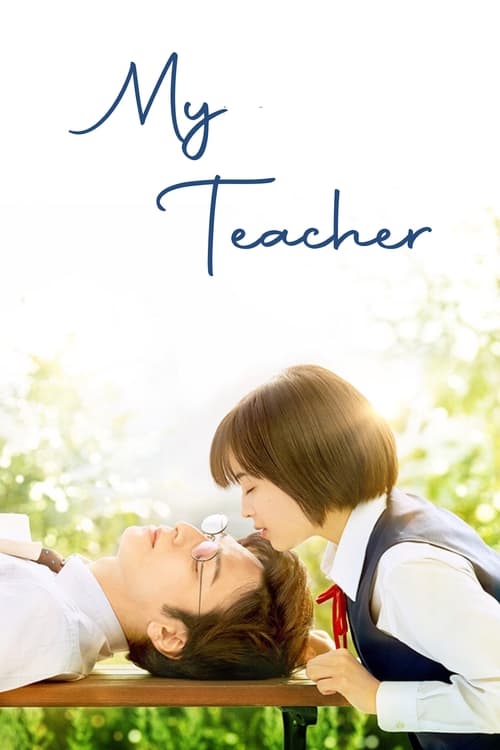
My Teacher
Plot
Hibiki Shimada, a normal 17-year-old high-school student, still does not know how to fall in love—although surrounded by love "experts"—until one day she realizes she's fallen in love with her hot and nice 26-year-old teacher, Itō. She then takes a path to make her teacher understand how she feels for him.
Get the Weekly Woke Watchlist
New and trending movies scored for woke bias, preachy messaging, and forced political themes — before you waste your evening.
No spam. One useful email per week.
Overall Series Review
Categorical Breakdown
The movie is a Japanese production focused entirely on a local-context social and ethical conflict (a student-teacher romance). There is no presence of 'whiteness' vilification, forced diversity, race-swapping, or any discussion of intersectional hierarchy or systemic oppression. Character worth is based on personal merit, persistence, and emotional sincerity.
The film critiques specific Japanese societal norms regarding professional boundaries and teacher-student relationships, which is an internal cultural critique, not a generalized 'Civilizational Self-Hatred.' There is no evidence of hostility toward Western civilization or demonization of ancestors. The setting and culture are treated as the natural, un-demonized backdrop for the story.
The female protagonist, Hibiki, is a persistent and independent young woman who initiates and drives the courtship, which gives her significant agency, but she is clearly an earnest, developing adolescent and not an all-perfect 'Girl Boss.' The male teacher is stern but kind, acting as the protective and professionally responsible adult, which is not an emasculation trope. The narrative does not contain anti-natalist or 'motherhood as prison' messaging.
The narrative focuses exclusively on traditional male-female pairings. The central relationship and all significant secondary romances are heterosexual. There is no presence of queer theory, deconstruction of the nuclear family (which is not a factor), or commentary on gender ideology.
The core conflict is an ethical and professional one based on school rules and social expectations, not on religion. The film is a romantic drama and contains no elements of hostility toward religion, especially not Christianity, nor does it promote a philosophy of moral relativism over objective truth. The moral line is drawn by professional conduct and age-of-maturity laws.
Get the Weekly Woke Watchlist
New and trending movies scored for woke bias, preachy messaging, and forced political themes — before you waste your evening.
No spam. One useful email per week.