Impossibility Defense
Plot
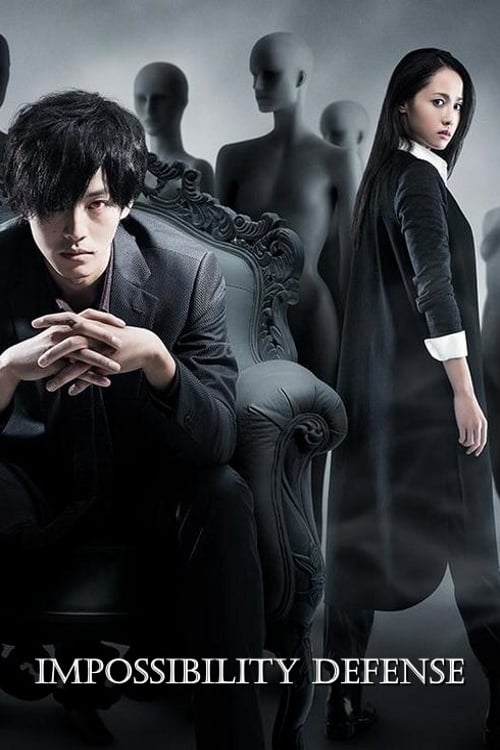
At a certain park, there is a mysterious man, who has red eyes and a black suit, that people can go to and request him to kill someone. His assassinations can never be blamed on him because he takes no illegal action. His strength is in the power of suggestion and the arrangement of events. He accepts these requests, all the while privately mocking the foolishness of those whose unwise wishes he grants.
Get the Weekly Woke Watchlist
New and trending movies scored for woke bias, preachy messaging, and forced political themes — before you waste your evening.
No spam. One useful email per week.
Overall Series Review
Categorical Breakdown
The movie is a Japanese production with an all-Japanese cast, and the narrative focuses on the moral failings and depravity of individual, ordinary people who hire a supernatural killer. There is no evidence of race-based or intersectional hierarchy lecturing, nor is there any vilification of a specific ethnic group or forced diversity. Characters are judged by their personal moral choice and corruption.
The film’s critique is aimed at universal human moral weakness, 'desire or hate,' and 'foolishness' as demonstrated by the clients, not at a critique of Japanese (or 'Western') civilization, culture, or ancestors. The core institutions and national identity are not framed as fundamentally corrupt; instead, the legal system and the detective's pursuit of justice are the forces attempting to maintain order against individual evil.
The main detective, Tomoko Tada, was a male character in the original manga, indicating a deliberate gender-swap to elevate the female lead. She is portrayed as an instantly perfect, 'crack' detective who is the *only* person immune to the supernatural villain’s mind-control powers, which aligns with the 'Girl Boss' or 'Mary Sue' trope. Reviewer commentary notes the female lead is 'cold' and doesn't 'express love that well,' suggesting a narrative choice that prioritizes competency and detachment over traditional feminine or familial roles, while her male junior is less effective and subject to manipulation.
The movie is a Japanese crime and supernatural thriller focusing on the moral and legal challenge of an unprovable killer. There is no presence of alternative sexualities being centered, deconstruction of the nuclear family, or lecturing on gender theory found within the plot or themes.
The core of the movie revolves around deep moral questions of culpability, intention, and the nature of evil, with the villain acting as a supernatural agent of destruction who mocks human weakness. This narrative framework uses a transcendent, devil-like figure to expose moral relativism in the people he kills for, suggesting a nihilistic view of human nature. However, there is no explicit hostility toward organized religion or traditional faith, nor is there a vilification of religious characters.
Get the Weekly Woke Watchlist
New and trending movies scored for woke bias, preachy messaging, and forced political themes — before you waste your evening.
No spam. One useful email per week.