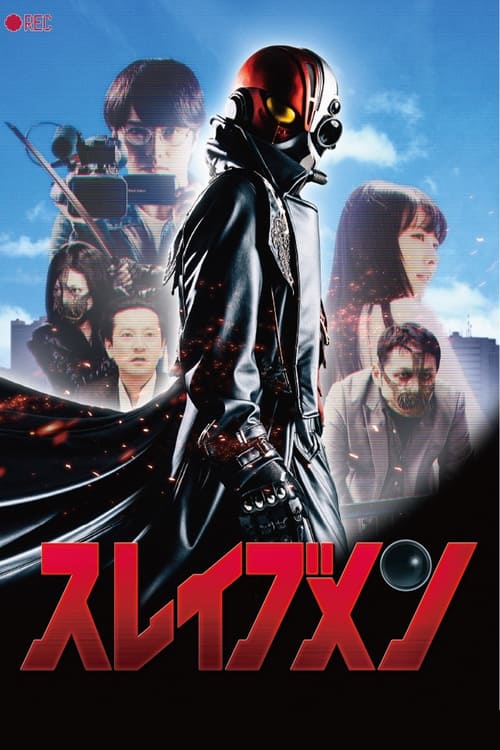
Slavemen
Plot
Yasuyuki Shimada is an ordinary guy who makes films. One day he gets a hold of a camera and a mask which has special powers to go back in time by filming the God of Death who handles all destinies. This is a new type of Dark Action Hero movie, where a simple filmmaker changes his destiny and tries to save his crush!
Get the Weekly Woke Watchlist
New and trending movies scored for woke bias, preachy messaging, and forced political themes — before you waste your evening.
No spam. One useful email per week.
Overall Series Review
Categorical Breakdown
The narrative is centered on a Japanese male protagonist, Yasuyuki Shimada, who gains power through a supernatural object to pursue a personal goal. The character's merit is defined by his willingness to act as a dark action hero to change his fate, not by his immutable characteristics. The film is culturally specific to Japan, eliminating the presence of Western race-based identity politics or the vilification of whiteness.
The action and plot are contained within a Japanese setting, and the conflict is entirely personal and supernatural, involving a God of Death and destiny. There is no evidence of hostility toward Japanese heritage, institutions, or culture, nor is there a 'Noble Savage' trope contrasting the home culture with a morally superior 'other.'
The male protagonist is introduced as a 'nebbishy' underdog who is empowered to become a hero to save a woman. This narrative structure places the male character's transformation and protective instinct at the center, counteracting the total emasculation of the male lead. The female character is the traditional 'crush' whom the hero seeks to save, which avoids the 'Girl Boss' or 'Mary Sue' archetype of instant, unearned perfection.
The main romantic relationship driving the entire plot is the heterosexual pairing between Yasuyuki Shimada and his crush. The film focuses on this normative male-female structure as the primary emotional motivator. There is no information suggesting the presence of a queer theory lens, deconstruction of the nuclear family, or lecturing on sexual ideology.
The story involves confronting and 'taking the God of Death down,' which constitutes a rejection of divine fatalism and higher authority. However, the deity is a localized spiritual concept rather than a critique of Christianity or traditional Western religion. Morality is shown as a subjective choice by the individual hero to change destiny, which slightly leans toward moral flexibility, but it does not promote a full-fledged 'Traditional religion is the root of evil' theme.
Get the Weekly Woke Watchlist
New and trending movies scored for woke bias, preachy messaging, and forced political themes — before you waste your evening.
No spam. One useful email per week.