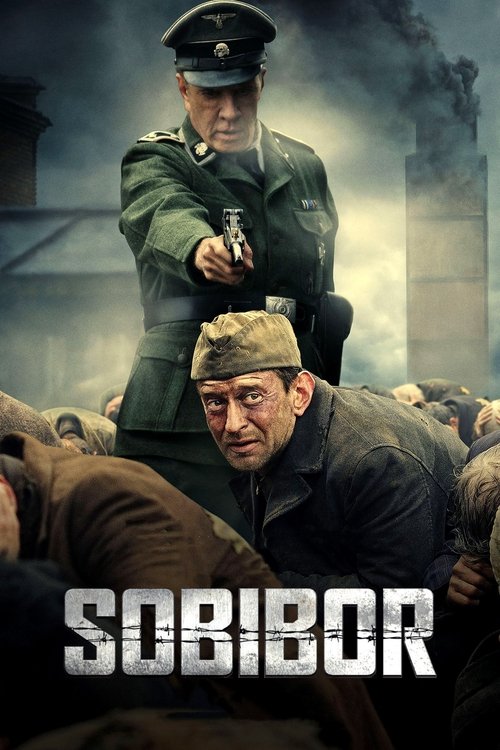
Sobibor
Plot
The film is based on a real story that happened in 1943 in the Sobibor concentration camp in German-occupied Poland. The main character of the movie is the Soviet-Jewish soldier Alexander Pechersky, who at that time was serving in the Red Army as a lieutenant. In October 1943, he was captured by the Nazis and deported to the Sobibor concentration camp, where Jews were being exterminated in gas chambers. But, in just 3 weeks, Alexander was able to plan an international uprising of prisoners from Poland and Western Europe. This uprising resulted in being the only successful one throughout the war, which led to the largest escape of prisoners from a Nazi concentration camp.
Get the Weekly Woke Watchlist
New and trending movies scored for woke bias, preachy messaging, and forced political themes — before you waste your evening.
No spam. One useful email per week.
Overall Series Review
Categorical Breakdown
The film’s central conflict is based on an historical, ethno-religious persecution (the Holocaust), which necessarily relies on group identity (Jewish prisoners) and their victimization by the Nazi regime. The protagonist is judged by his character and merit as a trained soldier who organizes the escape, contrasting with the resignation of others. The narrative does not utilize the modern intersectional lens, nor does it vilify 'whiteness'; it presents a clear battle between the persecuted (Jews) and the persecutors (Nazis).
The narrative completely lacks hostility toward Western civilization or one's own home. The Soviet-Jewish protagonist, Alexander Pechersky, is a Red Army soldier and a hero fighting against the ultimate embodiment of a corrupt civilizational ideology (Nazism). The film memorializes a heroic act of resistance, viewing the prisoners' defiance as a defense of life and dignity. Institutions like military service and ancestral courage are respected.
The main hero is a male Red Army lieutenant leading a predominantly male-driven military plan for the revolt, which is historically authentic. The focus is on traditional masculine virtues like courage, command, and protective strength. Female characters are present as victims and co-conspirators in the escape but do not embody the modern 'Girl Boss' or 'Mary Sue' trope. The plot is focused on survival, not anti-family or anti-natal messaging.
The film is a historical war drama focused on a Holocaust death camp uprising. The narrative is centered on survival, resistance, and the persecution of Jews. There is no presence of alternative sexual ideology, centering of non-traditional sexualities, deconstruction of the nuclear family, or lecturing on gender theory. The focus remains on the normative structure and the shared humanity of the prisoners.
The film focuses on a battle against absolute, monstrous evil (Nazism), which implicitly acknowledges an objective moral law. While a character may debate the value of prayer versus direct action, the narrative does not frame traditional religion, including the Jewish faith of the prisoners, as the root of evil or a source of bigotry. Faith and ultimate sacrifice are viewed as sources of strength and moral clarity for the victims.
Get the Weekly Woke Watchlist
New and trending movies scored for woke bias, preachy messaging, and forced political themes — before you waste your evening.
No spam. One useful email per week.