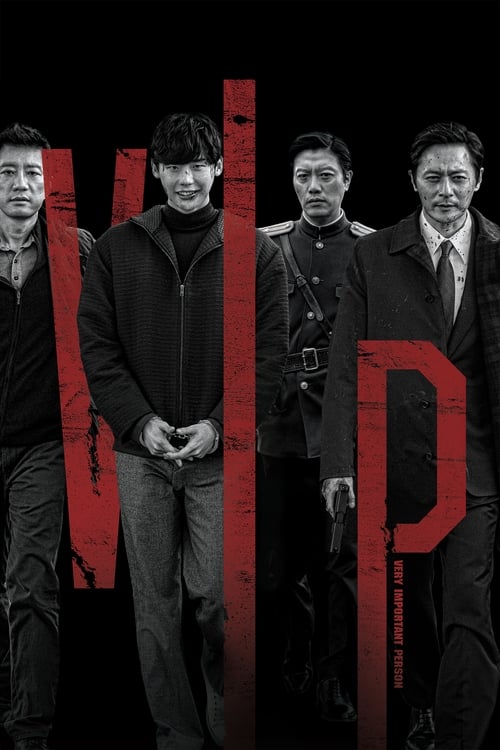
V.I.P.
Plot
A son to a high-ranked official in North Korea commits a series of murders going across the countries around the world. The movie depicts the following events as South Korea, North Korea and Interpol start chasing down after him.
Get the Weekly Woke Watchlist
New and trending movies scored for woke bias, preachy messaging, and forced political themes — before you waste your evening.
No spam. One useful email per week.
Overall Series Review
Categorical Breakdown
The plot avoids intersectional hierarchy and political lecturing, focusing instead on a geopolitical and institutional power struggle between South Korean, North Korean, and American male agents. The main conflict is not about vilifying 'whiteness' or promoting forced diversity, but about the clash between law-and-order merit and high-level political corruption that shields the killer. The killer's privilege stems from his political status in North Korea, not an immutable characteristic within an intersectional lens.
The film satirizes the corruption and incompetence of powerful institutions like the South Korean National Intelligence Service and the US CIA, but this criticism is directed at systemic moral failure, not a broad hatred of Korean or Western civilization. The protagonist detective's relentless pursuit of justice maintains an institutional ideal, and the final extrajudicial execution of the villain is a moral, rather than anti-civilizational, reckoning.
The film is the extreme opposite of a feminist narrative. It generated controversy due to its alleged misogynistic portrayal of women. Female characters are not depicted as powerful 'Girl Bosses' but are used almost exclusively as passive victims of brutal sexual violence, serving as plot devices to showcase the male serial killer's depravity and motivate the male protagonists' actions. The core narrative is a male-driven struggle for justice and revenge.
Sexual ideology is entirely absent from the plot. The narrative is a straightforward crime noir focused on an international manhunt, jurisdictional conflict, and personal revenge. There is no centering of alternative sexualities, discussion of gender theory, or deconstruction of the nuclear family as a structure.
The movie is a secular crime thriller that centers on objective evil (the serial killer) and the morality of punishment. The core struggle is between man's law and extrajudicial vengeance, not a critique or embrace of traditional religion. Faith is neither a source of strength nor a target of hostility, but the narrative is defined by a sense of objective evil requiring the monster's destruction, aligning with a transcendent morality.
Get the Weekly Woke Watchlist
New and trending movies scored for woke bias, preachy messaging, and forced political themes — before you waste your evening.
No spam. One useful email per week.