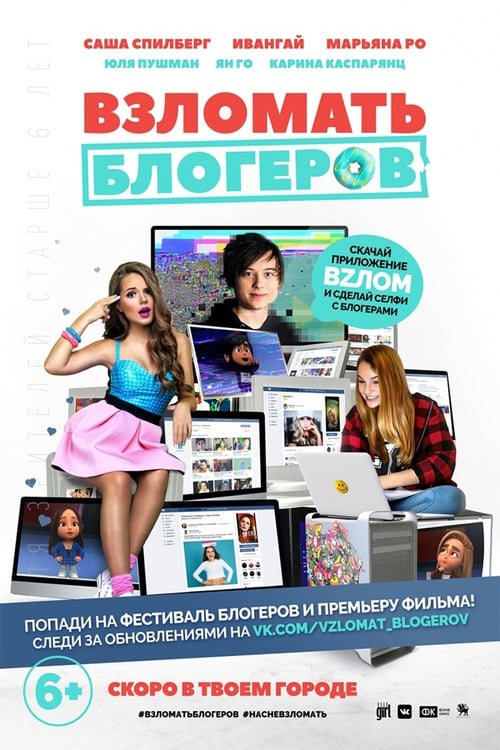
Hacking Bloggers
Plot
Popular teen video-bloggers became digital persons after being «hacked» by evil computer virus. They need to find their way back home from this «digital trap».
Get the Weekly Woke Watchlist
New and trending movies scored for woke bias, preachy messaging, and forced political themes — before you waste your evening.
No spam. One useful email per week.
Overall Series Review
Categorical Breakdown
The film stars Russian teen vloggers who are playing characters based on themselves, resulting in a naturally homogenous cast without forced diversity or race-swapping. The narrative focuses on a purely technical problem—escaping a digital trap—which completely avoids any discussion of racial privilege, systemic oppression, or vilification of any ethnic group.
The plot contains no elements of civilizational self-hatred or critique of a home culture or ancestry. The conflict is entirely focused on a computer virus and a digital world. The cultural background of the characters, as popular Russian internet figures, is simply their starting point and is not deconstructed or demonized.
The female leads are prominent in the adventure, reflecting their real-life status as popular vloggers, which is a low-level 'Girl Boss' trope by default. However, their competency is not instantly perfect or used to lecture on male inadequacy, nor does the film feature any anti-natalist or anti-family messaging. Their prominence is simply a reflection of their pre-existing public brand, earning a minor score increase over a perfect 1/10.
The plot is a fantastical digital adventure centered on popular teen bloggers, which does not involve themes of sexual ideology or gender theory. The narrative avoids centering alternative sexualities, deconstructing the nuclear family, or discussing biological reality as bigotry, maintaining a normative, non-lecturing structure.
As a lightweight comedy/sci-fi film about teen bloggers, the plot does not engage with themes of religion, spirituality, or morality at all. There is no presence of anti-Christian rhetoric, nor is morality framed as subjective 'power dynamics.' The focus remains entirely on the digital problem and the quest to return home, resulting in a low score due to the absence of the theme.
Get the Weekly Woke Watchlist
New and trending movies scored for woke bias, preachy messaging, and forced political themes — before you waste your evening.
No spam. One useful email per week.