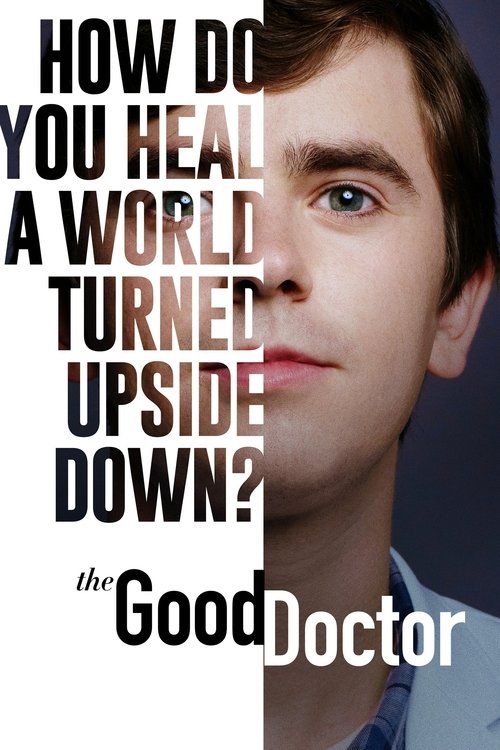
The Good Doctor
Season 4 Analysis
Season Overview
Dr. Shaun Murphy continues to use his extraordinary medical gifts at St. Bonaventure Hospital’s surgical unit. As his romantic relationship with Lea deepens, he will also face new responsibilities as a fourth-year resident when he is put in charge of supervising a new set of residents that will test him in ways he cannot predict. Meanwhile, the team must deal with the uncertainty and pressure that the COVID-19 pandemic brings now that it has hit their hospital.
Season Review
Categorical Breakdown
The plot disproportionately focuses on race and immutable characteristics, especially with the new resident class. The narrative quickly eliminates an arrogant white male resident who serves as a stand-in for 'privilege' and 'mansplaining.' Dialogue frequently uses race and gender to frame arguments; one character dismisses the counsel of a white male mentor by saying, 'Says the white man.' Episodes center on systemic racism in the medical field and the struggles of 'black people' and 'people of color,' with the social justice viewpoint consistently framed as the moral high ground.
The season directly tackles American political conflict, featuring an episode about a violent political protest and discussing the post-election dynamic, including an implied 'pro-Trump/anti-Trump' situation. The narrative frames home culture as being fundamentally broken by these political and racial divides. The focus on internal strife and systemic flaws within the country suggests a hostility toward national institutions and heritage. The finale, however, offers a brief external focus with the surgical mission to Guatemala.
The gender dynamics push a strong 'Girl Boss' theme where men are often depicted as either bumbling, toxic, or intellectually inferior to the female doctors. The narrative dedicates time to discussing 'women's struggles,' specifically the forced choice between career and motherhood and the systemic ignoring of women's medical problems. High-ranking women like Dr. Lim are shown as exceptionally competent, while male characters are often subjected to emotional or moral correction by their female counterparts.
Sexual ideology is heavily centralized in a specific 'queer-centric' episode. The plot features a trans man with a tumor who is also revealed to be pregnant, forcing the entire hospital to grapple with a case that explicitly deconstructs biological reality. This storyline pushes gender ideology and the concept of sexual identity as the most important characteristic. A new, prominent gay character who rejected his Hasidic Jewish community for a self-actualized life is also introduced.
The spiritual landscape of the hospital and the series is generally a moral vacuum, lacking any positive expression of faith or transcendent morality. The introduction of Asher Wolke, a gay former Hasidic Jew, uses a traditional religious structure as a repressive force that the character must escape to find personal liberation. This positions traditional religion as an impediment to authentic self-discovery, aligning with a soft anti-theistic rejection of organized faith.