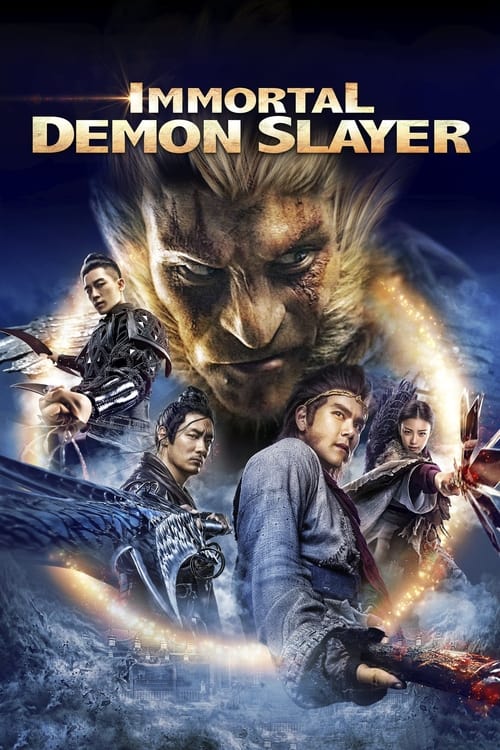
Immortal Demon Slayer
Plot
A giant rebelled against the heavens. It was declared a devil and defeated. The immortal heart evolved into Sun Wukong. The heavens found him, and ravaged his home. He enters the heavenly kingdom, disguised as a human, seeking retribution.
Get the Weekly Woke Watchlist
New and trending movies scored for woke bias, preachy messaging, and forced political themes — before you waste your evening.
No spam. One useful email per week.
Overall Series Review
Categorical Breakdown
The movie is a Chinese-produced mythological fantasy starring an entirely East Asian cast, removing any possibility of race-swapping or the vilification of 'whiteness' as the conflict is focused on the struggle for free will against a celestial class system.
The main conflict frames the 'Heavenly Kingdom' as the oppressive, corrupt force that destroys the hero's home and dictates fate, making the protagonist's rebellion a rejection of the ruling celestial institution, but not a rejection of Chinese heritage or culture generally. The hero's action is rooted in defending his home and helping innocent humans, demonstrating loyalty to the local civilization and people.
The gender dynamic involves the male hero Sun Wukong and the female lead Azi, the daughter of the main goddess antagonist, who grow together through a typical fantasy romance. The female lead is not instantly perfect but develops alongside the male characters, and there is no messaging that frames motherhood as a prison or that emasculates the male characters.
The narrative centers on a standard heterosexual romance and an adventure plot concerning fate versus free will, with no detectable themes concerning alternative sexualities, gender ideology, or deconstruction of the nuclear family.
The highest spiritual authority, 'Heaven' and its goddess, is the primary villain, which seeks to destroy the hero's home and controls all destiny through the Destiny Astrolabe. This firmly establishes traditional, institutionalized religion/divinity as the root of oppression, even if the heroes uphold an underlying transcendent morality of free will and helping the innocent.
Get the Weekly Woke Watchlist
New and trending movies scored for woke bias, preachy messaging, and forced political themes — before you waste your evening.
No spam. One useful email per week.